FOUNDATIONS REIMAGINED – Physiology at the BEDSIDE! #HR26 September 16-19, 2026!

Conference Overview

In the next edition of our sesquiennial conference, Foundations Reimagined: Physiology at the Bedside, we propose a deep dive into core physiological principles that are often misunderstood—but critically important at the bedside. Through clinically grounded lectures and interactive, case-based learning, participants will leave with a durable framework for approaching the acutely ill patient.

We are steadily moving away from an era of rigid, protocol-based medicine toward one of precision and personalized care. While this evolution promises better patient outcomes, it also demands more from the bedside clinician: deeper understanding, sharper skills, and greater confidence—rather than simply rubber-stamping a protocol or extrapolating population-level data to the single patient in front of us.

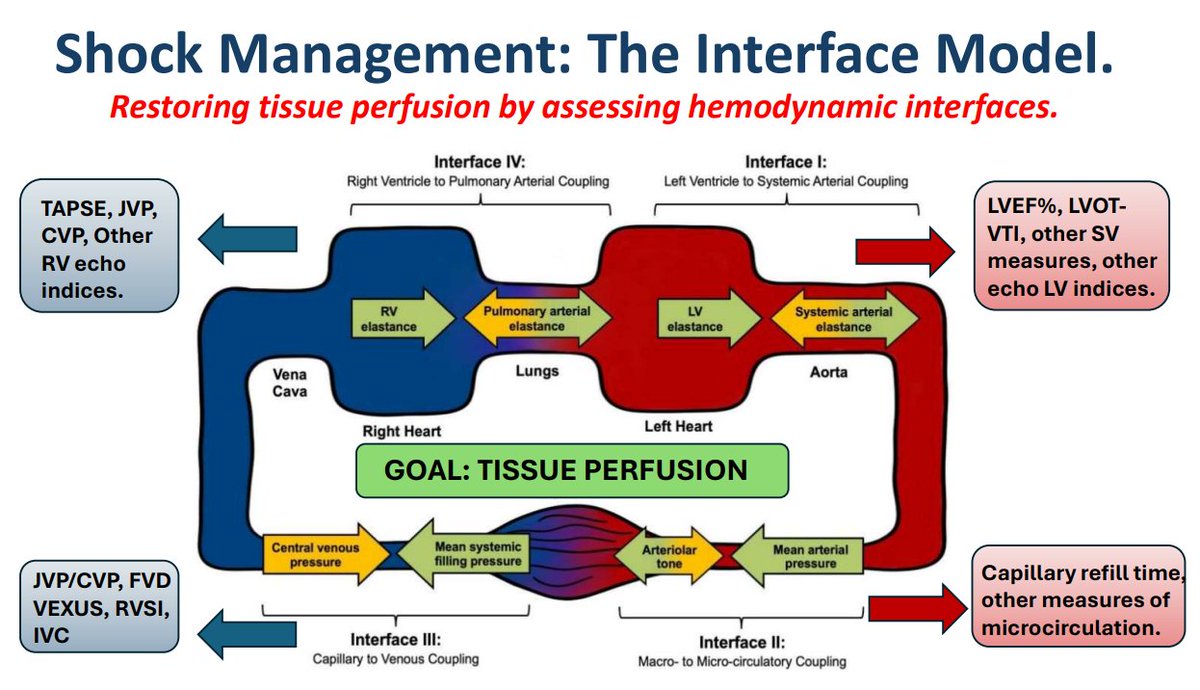
Following our previous event introducing the concept of hemodynamic interfaces, it became clear that clinicians need a stronger physiological foundation combined with interactive case discussions to develop a practical, usable approach to shock assessment and management. Given the profound overlap between shock and respiratory failure, this conference will also feature a comprehensive physiologic approach to respiratory failure.

Advanced POCUS hemodynamics sessions will be offered for those seeking to operate at the cutting edge, alongside parallel core POCUS sessions designed to support learners earlier in their journey.

In September 2026, we will once again assemble an international faculty of elite thinkers and educators to deliver practical physiology, bedside skills, and clinical reasoning applicable across the wards, operating room, emergency department, and ICU.

Don’t miss this amazing opportunity to learn, share, build and belong to an outstanding group of people who share the common goal of moving the needle in medicine.

Scientific Committee

Gigi Liu · Andre Denault · Ben Daxon · Ian Ajmo · Kiran Rikhraj · Jasmine Lam · Julien Viau-Lapointe · Philippe Rola

Preliminary Programme

DAY 1

Single Track – Morning

TimeSession
07:55–08:00Welcome – Rola & Spiegel
08:00–08:30Introduction & Clinical Case – Crager
08:30–09:00How the Blood Goes ‘Round – Miller
09:00–09:30Andromeda 2: What Did We Learn? – Hernandez
09:30–10:00Understanding RCT Limitations at the Bedside – Lynn
10:00–10:30Coffee Break
10:30–11:00Hot topic TBA!
11:00–11:30RV at the Bedside – Siuba
11:30–12:00“Mind of the Expert” Case Discussions – Panel
12:00–13:00Lunch
13:00–13:45Keynote Lecture: Changing the Oxygen Paradigm – Marino

Split Tracks – Afternoon

Respiratory Track

TimeSession
13:45–14:15Understanding FRC – Daxon
14:15–14:45Managing the First Hour of Severe Respiratory Failure
14:45–15:15Managing the Next 24 Hours of Severe Respiratory Failure – Spiegel
15:15–15:30Coffee Break
15:30–17:00Workshops

Extreme Hemodynamics Track

TimeSession
13:45–14:00The RV Waveform: Clinical Applications – Denault
14:00–14:15Understanding Afterload – Magder
14:15–14:30Renal Hemodynamic Manipulation – Corradi
14:30–15:00Surfing the Spectrum of Tamponade – Scott
15:00–15:30Coffee Break
15:30–17:00Workshops

DAY 2

Single Track – Morning (Case-Based with Workshops)

TimeSession
08:00–08:20Case 1 – Miller & Haycock
08:20–08:40Case 2 – Spiegel & Hockstein
08:40–09:00Case 3 – Denault & Scott
09:00–09:20Case 4 – Crager & TBA
09:20–10:40Workshops & Coffee (VTI / EF / TAPSE / VExUS)
10:40–11:00Case 5 – Kattan & TBA
11:00–11:20Case 6 – Argaiz & TBA
11:20–11:40Case 7 – Siuba & TBA
11:40–12:00Case 8
12:00–12:30Keynote: PreOx 2026 – Weingart
12:30–13:30Lunch

Split Tracks – Afternoon

Respiratory Track

TimeSession
13:30–14:00Navigating NIV Choices – TBA
14:00–14:20Can I Give Inhaled Drugs to NIV Patients?
14:20–14:40Approaching Vent Dyssynchrony – Chatterjee or Mireles-Cabodevila
14:40–15:40When Do I Reach for Inhaled Drugs in Intubated Patients? – Daxon
15:40–16:30Workshops & Coffee
16:30–17:00CPAP as a Mode of Ventilation – Spiegel
17:00–17:30Thoracic Electrical Impedance in ALI– Viau-Lapointe

Extreme Hemodynamics Track

TimeSession
13:30–14:00The Doppler Envelope: Fundamentals – Argaiz
14:00–14:20Resuscitating Aortic Stenosis – Augustin
14:20–14:40The Modified Tei Index – Haycock
14:40–16:00Workshops & Coffee
16:00–16:30Using Cerebral Oximetry to Tailor Resuscitation – Denault
16:30–17:30Shock: Interactive Cases – Crager

Faculty!

  • Abhilash Koratala
  • Andre Denault (Institut de Cardiologie, Canada)
  • Ashley Miller (Ashbury & Telford, UK)
  • Ben Daxon (Mayo Clinic, USA)
  • Eduardo Argaiz (Mexico)
  • Eduardo Kattan (Universidad Pontificia, Chile)
  • Francesco Corradi (Italy)
  • Frederic Verbrugge (University Hospital Brussels, Belgium)
  • Gigi Liu (Johns Hopkins, USA)
  • Glenn Hernandez (Universidad Pontificia, Chile)
  • Jeff Scott (Jackson Memorial, USA)
  • Joe Nemeth (MUHC, Canada)
  • Julien Viau-Lapointe (Maisonneuve-Rosemont, Canada)
  • Rafael Melo (Hopital Sirio-Libanes, Brazil)
  • Katie Wiskar (UBC, Canada)
  • Korbin Haycock (Loma Linda University, USA)
  • Marco Garrone (Italy)
  • Matt Siuba (Cleveland Clinic, USA)
  • Max Hockstein (MedStar Washington, USA)
  • Rory Spiegel (MedStar Washington, USA)
  • Ross Prager (Western University, Canada)
  • Sara Crager (UCLA, USA)
  • Scott Weingart (NUMC, USA)
  • Sheldon Magder (McGill University, Canada)
  • Taweevat Assavapokee (Mahidol University, Thailand)
  • Lawrence Lynn (Cincinnati, USA)
  • Trina Augustin (Mayo Clinic, USA)
  • William Beaubien-Souligny (CHUM, Montreal, Canada)

Santa Cabrini Grand Rounds: Dr. Asher Mendelson on High Risk Intermediate PE & PERT Teams. #FOAMed #PERT #PE

Great lecture exploring the grey zone of high risk intermediate PE. To me a very interesting area. Don’t let anyone tell you there is clear evidence on how to manage these patients – there isn’t. There’s a lot of nuance and we don’t quite yet have a grasp on how to really know who needs more aggressive management. People like Asher and those pushing the envelope with PERT teams and exploring this space will hopefully get us there.

My personal take is that the answers will be in using combined markers of congestion and forward flow (because obstructive shock both congests and restricts CO) along with some (CT?) measures of anticoagulation-responsiveness of clot burden, with dynamic cardiopulmonary reserve measures.

Enjoy the talk!

cheers

Philippe

ps in case you didn’t know, we are holding a VExUS & Hemodynamics course in NYC in a few weeks, learn to look at both congestion and forward flow and join us for an afternoon of shared knowledge! https://thinkingcriticalcare.com/2025/09/07/vexus-hemodynamics-nyc-dec-4th-2025/

VExUS & Hemodynamics NYC, Dec 4th, 2025!

We’re super excited about coming to NYC, but even more about unleashing The VExUS Course 2.0, which will include the integration of venous congestion into our comprehensive hemodynamic interface framework. So participants will have an all-new version of the course, along with an introduction to the interface concept which is gaining a lot of traction, and (of course we are biased) we feel is the way forward in assessing and managing any hemodynamic issue. So this will be 4 hours of hands-on workshop and case discussion. We will also introduce participants to the use of the FlowPatch, a Doppler system for the neck veins that assesses both forward flow and congestion, and fits very well into the interface system. This course is for those who believe (as we do) that tailoring treatment to the individual patient’s pathophysiology is the way forward. Participants will leave having levelled up.

Who Should Attend?: Any clinician looking after sick patients, particularly those involved in resuscitation, congestive heart failure, and kidney injury. Learning Objectives: (1) To understand the pathophysiology behind venous congestion, (2) To be able to analyse venous congestion with bedside ultrasound, both with traditional devices and with the Flosonics FloPatch, (3) To be introduced to the Hemodynamic Interfaces and learn how to incorporate findings of venous Doppler within this framework.  Course Format: flipped classroom with 4hr Pre-Course Material and 4h Hands-On Workshop. Cost: $499 Physicians/$399 Trainees. No CME.

Register here: https://ccusinstitute.wixsite.com/ccus/events/vexus-nyc-feat-flopatch. Only 30 spaces available, REGISTER NOW!

Thanks to our sponsors:

H&R Applied Hemodynamics – Online Rounds for Critical Care Fellows.

So for the last couple of years, originally at the request of my good friend Jay Chatterjee of Riverside, California, we have been putting together a series of hemodynamic lectures, featuring several familiar H&R faculty who really love this topic, for the Riverside and Santa Cabrini critical care fellows. This past year, we basically went thru our interface model (https://pubmed.ncbi.nlm.nih.gov/40423078/), and were joined by a new group of fellows from Aurora St-Luke’s, and this year will welcome fellows from Ben Daxon’s program at Mayo.

These rounds consist of a panel discussion followed by case discussion and encourages – no – requires participation from the fellows. We’ve found that all have taken intuitively to this hemodynamics model particularly when tied to clinical cases to get some reps into the practical use.

So this year, we are planning an 8 session series, 90 minutes each, running from September to June, once a month. Fellows will have some pre-reading to do and several will be requested to present a case with challenging hemodynamics for the panel to discuss.

We would like to give other fellows the opportunity to take advantage of this unique set of discussions, and this year will add one group of fellows, so if you are a program director or involved in critical care fellowship education, reach out to hospresusconference@gmail.com and let us know. It will be first come, first served. The registration fee for a program to attend will be 499$ USD.

Unfortunately, we will not be accepting individual fellows for this as we feel that implementing an interface-based hemodynamics approach will work far better as a team than via individuals.

Everyone is welcome to watch the first iteration of these below:

FACULTY – Jay Chatterjee, Korbin Haycock, Pedro Salinas, Philippe Rola, Rory Spiegel, Ashley Miller, Sara Crager, Jon-Emile Kenny, Matt Siuba…and more.

Thanks and to the fellows, looking forward to meeting you in September for our 2025-26 series!

cheers

Jay & Phil

The RV Waveform by Andre Denault. #HR23 TBT!

Here’s a throwback to #HR23 when Andre Denault first introduced the PAC with an RV port to analyze the RV waveform, which we usually only have during initial advancement of the PAC (I confess I have sometimes pulled back just to get it and look at that slope!). But these are now available! As always, invaluable hemodynamics by the grandmaster Andre!

Thanks to BD for being an #HR25 sponsor!

A Cool Physiology Study on APRV-TCAV by Zou et al.: Our Thoughts! #FOAMed #FOAMcc

So when we saw this study come out last week, we thought it was worth having a little chat about it, so let’s see what my usual suspects (when it comes to TCAV and, well a lot of other things…) had to say about it, and of course about TCAV in general!

So for anyone who hasn’t yet heard, #HR25 is coming up in a couple of months, and while this year, we are not specifically talking about TCAV, it will be absolutely fantastic, and there is an awesome ventilation pre-congree course, Eduardo Mireles Cabodevila’s SEVA Course, and of course Rory, Korbin and I will be more than happy to hallway talk your ear off about TCAV, so come and hang out!

Of course, for those who really want to deep-dive APRV-TCAV, our Flipping the Vent course is available online, and if you have a group/team, we can organize an online workshop as well.

Cheers!

Philippe

Lionel Lamhaut’s Pre-Hospital ECMO course at HR25!!! May 24th and 25th, 2025!

It was so great to meet, hang out and talk ECPR with Paris’ SAMU ECPR leader Lionel Lamhaut last month in Montreal, a city we are actively trying to bring pre-hospital ECPR to, thanks to the relentless work of Lawrence Leroux.

For more about Lionel’s team: https://www.paris-ecmo.com/

In the meantime, we are super excited to host the North American Premiere of Lionel’s famous pre-hospital ECMO course and open the registration for a two day, small-group affair with hands on workshops, lectures and discussions with ECPR experts. There are only 20 spots, so don’t wait. Come learn from some of the world leaders including Lionel himself, of course! And we may even have a surprise lab in the works…

Register here: https://ccusinstitute.wixsite.com/ccus/events/hr2025-fluid-tolerance-all-things-vexus-shock-hemodynamics

This takes place at Santa Cabrini Hospital, May 24th and 25th, 2025. Registration is 1,699 USD +tx. Here is the schedule:

DAY 1

  • 9 :00-9 :45 High quality CPR
  • 9:45 – 10:45 : ECPR Session, what does the literature say?
    • ECPR Indications ? When? Where?
  • 10:45 – 11:00 : coffee break
  • 11 :00 – 11:45 : ECPR, different cannulation techniques
    • Percutaneous implementation w/ ultrasound
    • Percutaneous implementation w/ fluoroscopy
    • Hybrid implementation:
  • 10:45 – 11:30 : ECPR Training on mannequin (Percutaneous implementation)

12:30 – 14:00 : LUNCH BREAK

  • 14:00 – 15:00 :  Training on mannequin (Hybrid implementation)
  • 15:00 – 16:00:ECPR implementation in different settings
    • PREHOSPITAL
    • ANGIO


DAY 2

  • 9:00 – 10:00: Dealing with the machine
  • 10 :00 – 11 :00 : ECPR and more
    • What about post ECPR Oxygen, MAP, …
    • Patient management in the ICU
    • ECMO-related complications
  • 11:00 -11:15 : Coffe break
  • 11:15-11:45 Organ donation in ECPR

11:45 – 13:00 : LUNCH BREAK

  • 13 00 1320 REBOA and cardiac arrest
  • 13 20 – 1400 How to set up your ECPR program, Panel discussion
  • 14:30 -14:30 : Priming devices
  • 14 30 – 1530 Simulation
  • 15 30  1600 Final discussion

A Hemodynamic Rant with Korbin Haycock! #interfaces #FOAMed #FOAMcc

So I’m always glad to spend some time chatting with my buddy Korbin, I always learn something! Here we talk about some nonsensical things we’ve seen and heard related to clinicians’ understanding of the hemodynamic circuit. And Korbin begins to introduce the interface 2.5!!! Lets see what develops with that.

Of course, anyone wanting to deepen their understanding and clinical use of hemodynamics and applying interfaces, its what we are focused on for #HR25!!! Join us!

Resus Chat with Matt Siuba! #FOAMed #interfaces #FOAMcc #FOAMer

Every resus doc needs to have a holistic approach to shock – MAP and forward flow simply isn’t enough. Here, Matt and I chat a bit about recent things we’ve heard in the world around us, as well as how we use and see the use of the interface concept.

Don’t forget to come up your game at #HR25!!! https://thinkingcriticalcare.com/2024/06/05/hr2025-the-hospitalist-the-resuscitationist-montreal-may-21-24-2025-hr25/

Interfaces with Rory Spiegel (@EMnerd)! #FOAMed, #FOAMcc, #FOAMer

So over the years I’ve learnt invaluable stuff from each and every one of the colleagues I’ve managed to build a network with, and certainly I have learnt – and unlearnt – a lot from this guy. Here, Rory and I discuss the concept of interfaces that a group of us painstakingly crafted over the last year.

So I hope this starts to spark some interest. Recently I’ve heard of a few discussions around sepsis and shock resuscitation that took place at pretty respectable and large conferences, and, to be frank, I was fairly aghast at what was being taught, especially to the young trainees. This type of pure forward-flow/fluid responsiveness obsession with no regard for tissue perfusion, congestion, etc is really distressing to hear… We have a lot of teaching to do.

If you want to master a global approach to hemodynamics, come learn how to understand, analyze interfaces and generate a coherent management plan for your shock patients. Oh yeah, and also learn a lot about congestion! https://thinkingcriticalcare.com/2024/06/05/hr2025-the-hospitalist-the-resuscitationist-montreal-may-21-24-2025-hr25/

cheers!

P