Tom Woodcock: The Revised Starling Principle and The Glycocalyx! #FOAMed, #FOAMcc

Screen Shot 2016-08-05 at 11.57.11 PM

So today, I had the chance of having a private tutorial with Dr. Thomas Woodcock (@thomaswoodcock) about the glycocalyx and the revised Starling principles.  For anyone interested in fluid resuscitation, this is an area you have to delve into. The basic principles we all learned (which are still being taught) are basically the physiological equivalent of the stick man we all started drawing as toddlers: overly simplified and far from an accurate representation of reality.

Now my first disclaimer is that I have been a colloid supporter for many years. My physiological logic for that had been to minimize the crystalloid spillover into inflamed/septic areas, particularly the lungs and abdomen, when those are the septic sources. However, I was likely misled by my education and lack of knowledge about the endothelium.

So I stumbled upon the whole glycocalyx thing a couple years ago, and this prompted me to try more enteral fluids – the only way fluids normally ever enter the vasculature – but little else. Aware that it’s there, but unsure what to do about it.

Now a year and a half ago, Andre Denault, my closest thing to a mentor, casually dropped the line to me about albumin not working. “Don’t use it. It doesn’t act the way we think it does.”  But it was a brief chat, and I didn’t get to pick his brain about it.  Just a few weeks ago, I discuss with Jon Emile (Kenny), and he’s coming to the same conclusion.  Damn. I’m finding it a bit harder to hang on to my albumin use, which is beginning to look a bit dogmatic and religious.

Here is Jon-Emile’s take on it – a must-read.

Here is Tom Woodcock’s site and article – another must-read.

And here is my discussion (in two parts) with Tom (to skip the silence, skip forward to about 30 seconds into each – sorry my editing skills are limited!)


Bottom line?

Probably stick to isotonic crystalloids, and some hypertonics.


Love to hear some thoughts!

Cheers


Philippe


The NYC Tracks with Jon-Emile: The Glycocalyx – The Next Frontier. #FOAMed, #FOAMcc

I was really psyched when Jon-Emile mentioned he would like to talk about the glycocalyx.  I first blogged about it here, basically when I stumbled on the extensive literature on this huge organ we have been completely ignoring in terms of physiology and therapeutics. It lines our entire endothelium, which is where most of our therapeutic interventions go, and we only heard of it in passing, possibly in histology class as med 1’s.   Hmmm.  Anyhow, here, Jon-Emile and I talk about it a little, discuss possible clinical implications, but more importantly Jon mentions the relatively new blog of Dr. Thomas Woodcock (@thomaswoodcock), http://www.fluidtherapy.org, who is one of the pioneer clinicians who have studied the glycocalyx, and who is now trying to bridge the bench to the bedside.

I’ve been fortunate enough to get in touch with him and we’re planning to record some discussions soon.

So, in my view, the glycocalyx is a formidable force we have been ignoring, and have been damaging often with our interventions. I’m hoping to see some developments allowing glycocalyx assessment outside of the labs in order to give us the tools to reassess every fluid in terms of the relative damage it does to what is essentially the gatekeeper between the blood and the tissues.

Love to hear some comments!

Here is the chat with Jon:


cheers


Philippe

Bedside US Procedure: Pericardial drainage – Pearls! #FOAMed, #FOAMcc, #FOAMus

So here is a video of a pericardial drain placement for pre-tamponade in a 33 yr old man, presumptively for a viral pericarditis (cultures and cytology pending).  In this case, the approach was subxiphoid, because this offered a large pocket of fluid with little or no risk of hitting the RV. The apical approach would have been more risky. Due to technical issues, the video only starts once the guide wire is already in place, but there are a couple of teaching points worth sharing nonetheless.

First, it is useful to confirm guide wire placement prior to dilating. Secondly, in cases such as this where the distance to the pericardium is more than a couple of centimetres (it was about 6 cm here), it is nice to be able to confirm under real-time that the dilator is indeed in the intended area. Because the guide wire is highly echogenic, and the dilator is not, one can see the proximal part of the guide wire “disappear” which indicates that the dilator has covered it, now visibly in the effusion. Once the pigtail is  inserted over the guide wire, final confirmation can be obtained by injecting back thru the pigtail and seeing echogenic material (due to minute amounts of air) appear in the pericardium. This is known as the Ajmo sign.

Cheers!


Philippe

Test Drive: GE’s New VScan! #FOAMus

I recently had the chance to try out the gen 2 VScan, since my original one, which replaced my stethoscope 4 years ago, suffered from trauma and is currently in a GE operating room undergoing serious surgery.

GE was kind enough to give me a replacement and have me give their next generation a go, so I thought it would be nice to give a little review for potential buyers.

First of all let me put it in perspective. When GE approached me to try the original VScan in 2011, I thought it was a cool toy, but, as an avid sonographer who tended to favour potent devices as opposed to the smaller laptop-based ones, I didn’t expect to fall for the ‘limited’ VScan.  They thought I might.

Turned out we were both right. If I had one of Santa’s elves pushing my ICU’s Aloka Alpha 7 behind me, handing me a clean probe and following me around, plugging and unplugging the awesome but bulky device, I would have no need for a VScan. However, I have yet to hear back from the North Pole, and in its absence, the VScan has been an absolutely awesome and indispensable tool. I’m not joking. My stethoscope has joined my antique medical instruments collection (which includes some really cool ancient metallic tracheostomy tubes btw). I use one of this plastic disposable ones if I really, really want to listen for a wheeze (although I find the degree of expiratory phase prolongation to me a much more sensitive sign of outflow limitation…).

I use the VScan every day, for almost every patient. Bedside ultrasound is an integral part of the physical examination one follow up. It beats guessing.

In my experience, it does the trick about 80% of the time. For more challenging patients, or for a more exhaustive examination, I push that Aloka myself. But when following up patients on the wards especially, having the VScan in my pocket is absolutely essential. Not having it is borderline unethical if I’m dealing with genuinely sick patients.

So the new device has a dual probe with vascular and surface capabilities, which is pretty cool, especially if the physician using it has no other device, as vascular exam is really important for procedures and for lung ultrasound (the gen 1 VScan will see B lines but doesn’t have the resolution to look for lung sliding. Here, I’m using the gen 2 on the wards with a sterile sleeve to drain an intra-abdominal hematoma.

IMG_9049IMG_9052

IMG_9054


So is this a plug for the VScan?  Not really. For bedside ultrasound? Absolutely. Every physician taking care of acutely ill patients should have some form of immediately available ultrasound. Anything else is short-changing your patient of the best care they can get.

My favorite article to illustrate the need to integrate bedside ultrasound in daily examination is the following, where novice medical students with ultrasound blow away seasoned, board-certified cardiologists in cardiac diagnosis:

Screen Shot 2016-03-29 at 10.58.42 AM


Keep in mind that you can still be a great clinician without bedside ultrasound. But you can be a better one with it.


cheers!


Philippe


p.s. thanks to Mr. Pascal Langlois of GE for the gen 2 VScan loaner!


Bedside Ultrasound for neuro-assessment in the ICU: another interesting case! #FOAMed, #FOAMcc, #FOAMus

So a woman in her 40’s was discovered unresponsive at home and emergently brought to hospital. She was known for severe rheumatoid arthritis and had had two CVAs in the past. She had unfortunately suffered from distrust and noncompliance.

An emergency cricothryrotomy was done for a difficult airway which, due to difficulty ventilating (no cuff in our cric kit) was exchanged to a 6.0 ETT over a tube exchanger. Unfortunately our CT scan was up for maintenance, so the CT head was delayed.

Our working diagnosis was another CVA with an aspiration pneumonia.

So of course we had to pick up the probe and take a look:
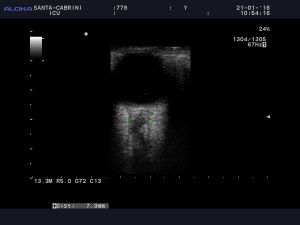
 

778_20160121_OEIL_0008


So the optic nerves are dilated significantly (bilaterally), suggesting an ICP over 20 mmhm at the very least.

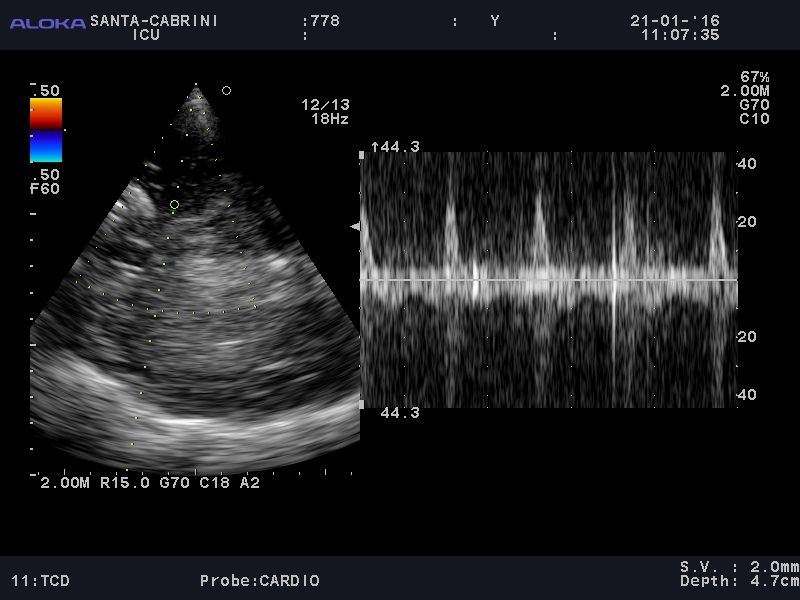
Next the TCD waveform (from the left temporal area):

778_20160121_TCD_0010

It was fairly difficult to find a good vessel, and likely at a bifurcation hence a narrow and bidirectional spike on doppler. The signal noise made it difficult to look clearly at diastolic flow and make a definitive call of circulatory arrest.

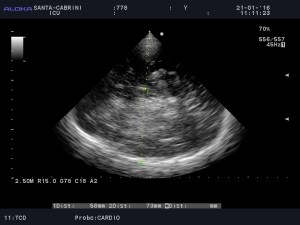
However, there is a clear asymmetry in the hemispheres (not due to gain difference), with the distal hemisphere (RT) showing increased echogenicity:

778_20160121_TCD_0005

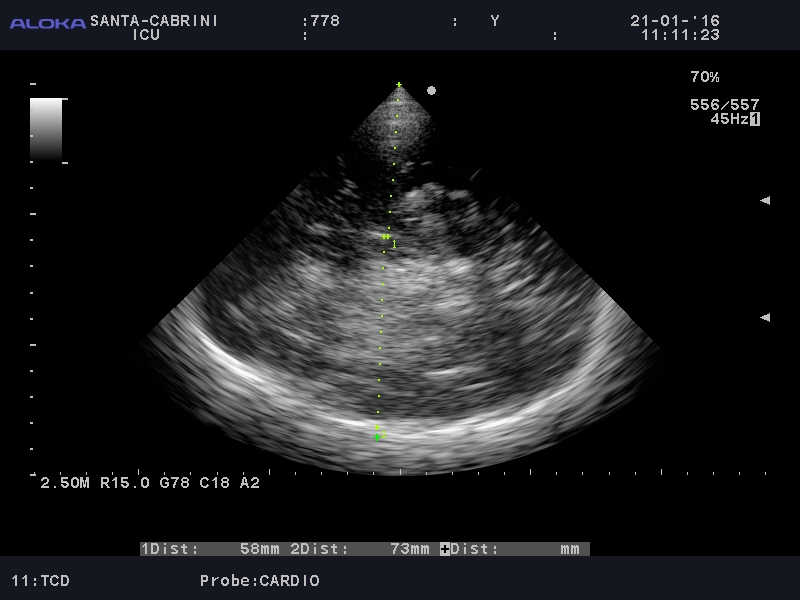
Also, there is a midline shift:

778_20160121_TCD_0007

This suggested an acute and severe process in the right hemisphere. A few hours later, the CT scan showed the following:


After family discussion, we withdrew therapy.

So one of the questions a colleague asked is whether I would have been comfortable making the call of an acute and severe process at the bedside and deciding to withdraw therapy, and at this point, I would have said no, in this particular case where the TCD signal wasn’t quite clean enough, and in a center with CT scan availability. I could, however, see a clinical scenario where, with a better TCD signal, I might do so, especially if I were in a remote area.

cheers!


Philippe


So to answer my colleague’s question about “calling it,” I reached out to the one who first started me in CNS ultrasound, Dr. Robert Chen (@ottawaheartrob), who had this very, very insightful comment (originally on his blog)

 
Can you “call it” with CNS POCUS?
1/30/2016
A dear friend and colleague wrestled with a difficult situation.

https://thinkingcriticalcare.com/2016/01/24/bedside-ultrasound-for-neuro-assessment-in-the-icu-another-interesting-case-foamed-foamcc-foamus/

A patient, who despite chronic diseases had distanced themselves from the medical system. Found collapsed, a long and hard fought resuscitation ensued. Airway challenges, ventilation and oxygenation challenges had to be overcome as part of a prolonged code. After Return of Spontaneous Circulation (ROSC), attention turned to the neurologic exam. Beyond the clinical history of prolonged cardiac arrest with the complicating hypoxaemia, the clinical exam was non-reassuring. Technical factors delayed access to CT scanning of the brain.

Optic nerve sheath ultrasound (an anatomic assessment) suggested raised ICP. Transcranial Doppler suggested the physiology of raised ICP. 2D grey scale ultrasound imaging of brain demonstrated asymmetry (yes, the team was THAT good). The question: should one stop resuscitation based on CNS POCUS alone?.

“Calling it” in resuscitation has a long history of being based on the clinical history and clinical examination alone. Think of the many “code blues” that you have attended. Many efforts have terminated with the team having decided that the patient could not be resuscitated without any imaging modalities employed, point of care (POC) or other. “Calling it” with POC ultrasound (POCUS) starts its history in the emergency department which eventually became the American College of Surgery’s Committee on Trauma (ACS COT) codified Focused Abdominal Sonography in Trauma (FAST). Patients were sent for laparotomy or subxipoid pericardial window based on POCUS alone. POCUS, in great urgency offered the clinician improved access to diagnosis and thus improved access to resuscitation direction for the patient.

What about “Calling it” for brain injury? Does the faster access to resuscitation mean something in this situation?

CT scans of the brain are the standard of care in this situation. POCUS has never meant to replace standard imaging modalities (echocardiography by cardiology, abdominal imaging by radiology, vascular Doppler, etc.) but rather to augment the physical examination, screen for time critical injuries and offer easy repeatability particularly in time sensitive situations. Which POCUS element is important in this case? None and all.

Would one stop CNS resuscitation without knowing the mechanism or resuscitatability of the CNS injury without a CT scan? Even in the hands of a vascular Doppler lab, transcranial Dopplers are supportive tests at best for neurologic determination of death (as opposed to ancilliary tests: 4 vessel angio, CT angio or scintigraphy). Stopping resuscitation at this phase (ROSC) based on POCUS would put the patient into a palliative mode as opposed to stopping a code wherein the previous diagnosis of death and non-resuscitatability is acknowledged.

Still, should they have “called it”? POCUS does another wonderful thing. It asks the clinician to touch their patient. Rather than being the acute care quarterback (often recording the nurses vital signs rather than performing their own) who orders “STAT ECG, CKs, troponins, and get cardiology here to do an echo” the POCUS able clinician spends a few more seconds examining and speaking to the patient, often offering the patient more clinical information quickly.

POCUS in this case in the hands of a caring clinician may do something different: when speaking to family they would be able to express that patient had perhaps already declared their intention through distancing themselves from the medical system. As well, they would be able to say “After I examined her, I was so worried that I did my own testing. I did a focused brain ultrasound which makes me very concerned that something terrible has happened: a stroke, a bleed, a tumour, something bad. What I would have normally done is order a CT scan of her head and then possibly call a neurosurgeon. What would she want me to do?”

POCUS brings us closer to out patients. We examine them for longer. Describing POCUS results and their significance in a contemporary fashion to the patient and/or their loved ones forces us to communicate more.

Stop CNS resuscitation without tomographic imaging in Canada? No. Understand CNS anatomy and physiology better through POCUS? Sure. Become a better CNS resuscitator as a result? Probably. Communicate better to patients and families at the end of life through POCUS? A strong possibility.

Bedside Ultrasound for neuro-assessment in the ICU: A Case

So a couple of days ago my colleague Ian Ajmo asks me to take a look at one of our patients for a second opinion. It’s a 75 year old male who had surgery for an incarcerated inguinal hernia during the night and was left intubated, but, despite his last sedation being during surgery (4 am), he still hasn’t woken up (11 am). He is known for a cerebellar glioblastoma but was functional living at home and had been given a one year prognosis.

So Ian was concerned, rightly so, and took the savvy initial step, after noting a GCS of 5 (some minimal reaction to pain), of looking at his optic nerve sheaths (ONS), and found them to be over 6 mm. For those unfamiliar, an optic nerve sheath dilation (ONSD) of 5.7mm (normal <4mm) generally corresponds to an ICP over 2o mmhg.

So this astute finding (as the requisition for a CT was being done) prompted me to do a little further neuro-ultrasound.  Here is the distal carotid doppler:

internal carotid

internal carotid

external carotid

external carotid

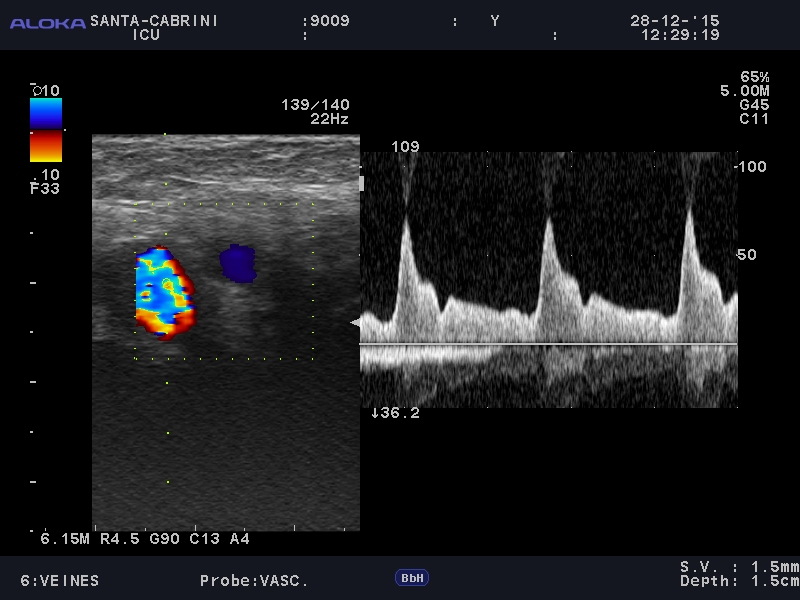
So this is done in the upper neck, just distal to the bifurcation, so while extra cranial, the internal carotid nonetheless represents a view into the relationship between arterial flow and intracranial hemodynamics. It takes virtually no experience to see the radical difference in flow between the internal and the external carotid. The EC shows a beautiful systolic peak and diastolic flow. On the other hand, the IC shows a small systolic peak, a bit of retrograde flow, and essentially minimal or no diastolic flow. That is telling us, physiologically, that the ICP elevation has radically limited diastolic flow. This isn’t good.

Next, I do trans-cranial doppler (TCD):

TCD

Now despite good visualization of brain tissue, specifically brainstem (sometimes difficult in men), I struggle to find any blood flow, and finally manage to see what looks like the basilar artery, and has very poor flow, similar to the EC, with a small systolic peak, retrograde flow  and little diastolic flow.

This right away tells us there is a massive ICP elevation explaining the lack of awakening, and a dismal prognosis.

CT:

Confirms a huge RT MCA stroke with 15mm midline shift and foci of hemorrhage.  While waiting for the CT his urine output was > 6 liter, prompting the attending to give some DDAVP and fluids to preserve hemodynamics (at least until the scan).

We withdrew therapy in view of the prognosis.

This case illustrates the usefulness and rapidity of bedside ultrasound to assess functional intracerebral dynamics, which can help diagnosing or ruling out an elevated ICP as a cause for a change in neuro status, or a “non-waking” patient, which is usually due to sedation accumulation, but now always…


cheers,


Philippe

Musings with Jon-Emile and Philippe 4: A Podcast on Pointers, Pearls and Opinions on Tough Ventilation Cases. #FOAMcc, #FOAMed

Hi, so in this little discussion, we go over some points about ventilating ARDS, obese patients, looking for optimal PEEP and other obscure physiological point that we are somehow interested in…


Love to hear comments and questions!


cheers


Philippe

Enteral Fluid Resuscitation (EFR): Third-world medicine in the modern ED/ICU? (ORT part 2) – #FOAMed, #FOAMcc, #FOAMer

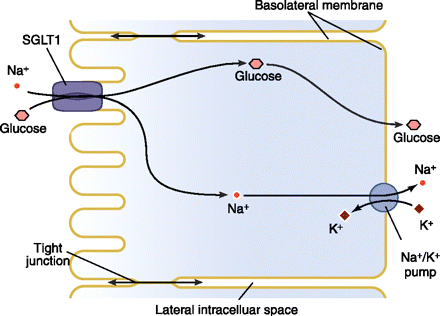
Screen Shot 2015-02-10 at 7.15.16 PM Enteral Fluid Resuscitation in the ER/ICU? For those who did’t come across it, part 1 of this series can be found here: http://wp.me/p1avUV-e8 So back to bringing the basics back to our ultra-tech world… Can I actually use this field technique in my bright and shiny ICU? Can I use oral hydration as a cutting edge therapy in my life-and-death patients? Sounds strange. Sounds like I should be using a precise device which lets me know exactly how much fluid has gone into my vascular space, because that’s where I want it to go, and I want to control exactly the composition of my serum electrolytes, etc, etc.  We like to control. But do we really? We actually have absolutely no idea how much of a fluid bolus remains intravascularly, in any one patient.  It will depend on his/her pre-existing venous filling, his serum protein levels, the integrity of the glycocalyx, and probably a few more things we don’t even know yet.  And as I rapidly distend atria, I release ANP which damages my glycocalyx further. Hmmm… As I mentioned in the last post, the only way fluid enters our vascular space is via the endothelial cells at the level of the GI tract for the most part. All “venous access” is iatrogenic. I do believe that the endothelial cells, by and large, will do a better job – in concert with the kidneys and rest of the blood cells – of controlling the plasma than we will, if given the chance. What logically follows is that, in the presence of a functional gut, I can consider using Enteral Fluid Resuscitation – that is, giving fluid for hemodynamic purposes, not just “maintenance,” by an enteral tube of some sort. So what could I give?   What’s in it? The current reduced osmolarity WHO/UNICEF formula contains approximately the following: Screen Shot 2015-02-10 at 7.24.28 PM So, lets take a closer look at the players: 75 mmol/l of sodium, 75 mmol/l glucose, some potassium and the rest basically to balance the electroneutrality. The whole thing hinges on the glucose-sodium cotransporter, which drags sodium and water in along with the “desired” glucose.  Optimal water absorption takes place with Na between 40-90 mmol/l, glucose 110-140 mmol/l, and an osmolality around 290.  A higher Na may cause some hypernatremia, and a higher osmolality may result in water loss. Here is our friend the enterocyte illustrating just how this kind of solution will allow sodium absorption: Screen Shot 2015-02-10 at 7.31.54 PM   Do-it-Yourself Enteral Fluid Resuscitation Solution: So I’ve got a neat DIY option if I don’t want to break out the powder and start mixing in the middle of my unit: 0.45% or 1/2 NS plus 30 ml of of D50 would give us Na 77, Cl 77 and glucose 74, with an osmolality of 228. Pretty close. That’s what I’ve been using. How much? Well, I like the slow and gradual. Some of the rehydration data out there supports some pretty huge amount of fluids, but this has been done mostly in healthy but dehydrated athletes – not the case for most of our patients. I’ve been going with 250ml every 1-2h, as – for now – an adjunct to IV fluid therapy. This is conservative and completely arbitrary, but essentially a glass every hour or two certainly doesn’t seem excessively taxing. Who can I give this to? You do need a functional gut, so for now, my criteria are (1) essentially normal abdominal exam, (2) obviously no recent bowel surgery, (3) a patent and functional gut as far as I know, (4) no ultrasound evidence of ileus or gastric distension. But how can I be sure it’s going in the right place?  I can’t. Just like I can’t be sure my IV fluids are staying in the right place. But I do check – IVC ultrasound (gross but better than skin turgor!), urine output, HR, BP, etc. None of those are perfect as they are all multifactorial, but that is the nature of the game. The other thing I check is gastric distension by bedside ultrasound every couple of hours – obviously, if I’m just getting a fluid filled stomach, there’s no point, and eventually harm may ensue. When should I stop? Whenever you clinically decide you don’t need/want any further fluid resuscitation. As far as I am concerned, might as well stop the IV infusions first and have the enteral going after – in the end, you are hoping your patient will go back to drinking and not require a PICC line for discharge, aren’t you?  So you stop when the patient does it on his or her own. I’d really like to know if anyone out there is doing something like this. It would be great to compare notes and evolution. Drop a line!   cheers, Philippe

Musings with Jon-Emile & Philippe – Fluid Resuscitation: Physiology and Philosophy! #FOAMed, #FOAMcc, #FOAMer

So here, Jon-Emile and I explore a topic I’ve posted about before (http://wp.me/p1avUV-bd) so I can see if a master physiologist agrees with my rationale (…not just my rationale but supported by a ton of literature many choose to overlook!).

Please visit http://www.heart-lung.org for Jon’s awesome physiology tutorials!

Love to hear listeners’ thoughts!

cheers


Philippe

Bedside Ultrasound Case: Look Left and Right! #FOAMed, #FOAMus

So I get a patient in the ED who had chest pain and a decreased LOC, vomited and got intubated. I see this elderly (88 yrs old) gentleman a couple of hours after presentation, after basic management including some plavix and heparin for a mildly elevated troponin.

Of course, by now you all realize that a rapid CUSE (Critical UltraSound Examination) is what I start with, after an ultrabasic history.

So my first couple of views show a more-or-less normal IVC, and here is the parasternal long axis:

Anything exciting here? Not really, nothing to hang your hat on at a glance.

Ok, so thanks to FOAM, I recently decided to add the right parasternal view to my regular exam, both to look for lung sliding (I admit I sometimes skip this when not specifically looking for pneumothorax) but also to possibly see some right sided pericardial abnormalities, etc… Here is what I see:

Hmm… A large, vascular structure that seems to have two lumens… a flap? Back to the patient exam, and the left toe is upgoing  and seems more flaccid in the left upper extremity…

Lets creep up the vascular path to the neck vessels:

Here, we can clearly see that most of the carotid lumen (lower right) doesn’t have any flow. That’s suboptimal. In fact, only a small crescent of flow between 3 and 6 o’clock is seen.

Here is the CT:


So here we can clearly see the dissected ascending aortic aneurysm that extends into the right carotid artery.

Due to advanced age and dismal overall prognosis, support was discontinued after discussion with the family.

I thought this would be a great case to share due to the fact that it could have been an initial bedside diagnosis, but I have to say I consider it fortuitous that I happened to look right, then up – which I easily could not have done. Not that it made any difference in this case, but on the next one, it just might!


Thanks FOAM!


cheers


Philippe