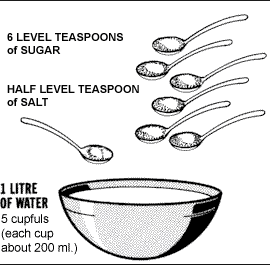
Enteral Fluid Resuscitation? The WHO to the rescue in the ED/ICU? (ORT part 1) #FOAMed, #FOAMcc, #FOAMer

So something has been trotting around my head for a few months, and it actually stems from a small and not-so-proud moment I experienced during a conversation with my wife, while she was still a resident.

She was telling me some of the stories of the day, and how one of her supervisors who had a mixed outpatient and ED practice, always pushed them to use PO fluids, get rid of IVs and get the patients home.  I kind of scoffed, in a sadly typical acute care physician mode, saying how you had to be a bit more aggressive and give them IV fluids to revert their dehydration a bit faster.

Then I caught myself. Hmmm. What exactly am I saying this (con brio) on the basis of. Knowledge, or belief?    I tried to find knowledge but came up woefully short. It seems I’m doing this out of habit, what I’ve seen/learned/believed in the two decades since someone handed me an MD degree. Damn.

So, I do believe in evolution. We have evolved platelets to stop bleeding, fibroblasts and osteoblasts that can fix bones, white cells that go mop up the messes, and all kinds of other good stuff.  One thing we do NOT have is small openings in vascular structures that allow unprocessed, man-made fluids directly into the bloodstream. We make these. We insert tubing into normally sterile environment and infuse a vast number of medications directly into this fragile matrix of cells and organic colloid – with the best of intentions.

In our physiology, however, the ONLY way fluid ever enters the vascular spaces is by diffusion from the outside of the endothelial cell into the lumen, molecule by molecule and ion by ion.

So let me seemingly diverge for a bit…

Screen Shot 2015-02-09 at 12.05.58 PM

Prior to the 1970’s, restricting oral intake was a “cornerstone” therapy of diarrheal illness, due to the pervasive belief that the GI tract needed time to heal and recover before resuming normal function. This was felt to be crucial. Hence, only IV therapy was used (in developed countries), and in the underdeveloped world, the death toll was appalling – especially among children.   In the 40’s, Dr. Darrow of Yale started actually studying the GI tract fluid and electrolyte issue, and advocating oral rehydration with mixed fluids. He was able to bring infant mortality radically down in his practice, but it would take over twenty years before a groups started to formally look at this in the 60’s.  Finally, in the late 70’s, the WHO pushed this out into the field, and the childhood worldwide mortality from acute diarrheal illness dropped by over 70%, from over 5 million deaths a year to a bit over 1 million – at that time.

Oral Rehydration Therapy (ORT) is now felt to be one of the most significant advances in modern medicine. Compared to that impact, all the critical care and cardiology trials are about as significant as a drop in a bucket. We’re not talking about composite end points and subgroup odds ratios of 0.85…

For a great review on this check out The History of Oral Rehydration Therapy by Joshua Nalibow Ruxin (google it).  A great story of science and humanity, good and bad.

So, back to 2015 ED/ICU’s.

Screen Shot 2015-02-09 at 12.06.26 PM

The question now becomes the following: why – in the presence of a functional gut – do I choose to entirely rely on non-physiological IV fluid resuscitation?

I can already hear the roars and the outrage and the cries of heresy.  And heresy is certainly what this is (Heresy is any provocative belief or theory that is strongly at variance with established beliefs or customs – Wikipedia). But that doesn’t make it wrong.

So I would ask everyone – particularly the naysayers, to examine their knowledge and see if they actually have any at all that supports the strong conviction that IV fluids are the way to go in ALL cases (my N=1  principle precludes going for the one-size-fits-all therapeutic approach).

Now everyone agrees that, once patients are better, they should be on feeds with little maintenance fluids. I don’t think many will debate that. So that should be the basis to wonder whether, in the presence of a functional gut, a variable proportion of fluid resuscitation in acute illness should be enteral…

I’ll let everyone digest that.

Comments more than welcome.

More to come in Part 2.


cheers!

Philippe

Is medicine approaching a philosophical crossroads? Critically important meanderings by Dr. Lynn! #FOAMed, #FOAMcc

So I feel really honoured that some fantastically bright and forward-thinking people take precious time out of their days to read my rants, and even more so to leave some comments.  I sometimes feel that the message contained in these is actually more important than what I spewed out in the first place, so here is quite an essay by Dr. Lawrence Lynn:

Excellent. This may be the Critical Care Quote of 2014.

“The N=1 principle: remember that we are never treating hundreds of patients at once, and we do not have to decide what is best for most (which is what an RCT generally answers) but what is best for the one patient we are treating.”

In fact when RCTs use a simplistic unified guessed phenotype as a surrogate of a complex disease (e.g. sepsis) in a highly heterogeneous population of critically ill subjects, one cannot even say that the RCT tells what is best for “most” since the first question a scientist trying to understand the validity of the “true state” under test would say is “most of what”, Of course when a free (unboxed) scientist learns that the true state was defined by a guess the discussion is over.

This SCCM will be the 25th anniversary of the guessed sepsis and septic shock criteria. It marks 25 years of failed and non-reproducible sepsis trials using the guessed criteria as standards. The beribboned SCCM speakers will rise to the podium and speculate on and on about what all of these studies might mean. None of them will formally call for reform of the science. Thomas Kuhn shows us that they cannot call for reform any more than those holding the guessed geocentric model could call for reform. “Though they may lose faith.. they will not abandon the dogma which led them to crisis” .

So it is up to you, the young women and men to speak up and demand reform. 25 years if failure is enough. How long will you sit silently in the audience and listen to P values responsive to guesses from a few well meaning docs from another era.

Stand up as a group at this SCCM and demand reform. Let this anniversary ring in a new chapter in critical care research.

If you have not read this editorial below, read it before the SCCM. No one argues that this is not the true history of sepsis science but no one has the courage to stand up and demand reform.

Maybe the 25 year anniversary of failure as a function of using guesses as gold standards could provide the impetus. The world depends on you. There is no backup.

http://www.ncbi.nlm.nih.gov/pubmed/24383420


Here is the solution for a scientific revolution. First read this guide to Dr. Kuhn’s book “The Structure of Scientific Revolutions”. (especially chapter 4)

http://philosophy.wisc.edu/forster/220/kuhn.htm

Then the young docs (and any of the old guard willing to break from the 25 year old dogma) should move together at the SCCM meeting, and plan to do so before the meeting in social media to collectedly call for reform of the science.

If only one calls for reform, of course grants, promotions, etc can dry up for that person. That is of course what those on academic tenure tracks are afraid of. Young academics are taught to rub elbows with the thought leaders, not to formally and publically question the leaders fundamental dogma. Sure you can go your own way a little off the path, for example, questioning whether or not a given threshold is the right one. However this freedom is a façade, as one cannot question whether there actually is a unified phenotype of “sepsis” definable by simple thresholds without risking much.

However, as Dr. Kuhn teaches, with any reform movement in science, once critical mass is reached there will be no repercussions because the old guard will actually join and move with the paradigm shift. They will even try to lead the shift as they see that leading with the old dogma is not possible and they desire to remain thought leaders and certainly do not wish to be among the last clinging to the old dogma.

The crisis Dr. Kun describes in chapter 4 is upon us. Look around. Do you see that the public cannot help save themselves. It is up to us to begin this revolution. Don’t let this crisis go to waste. Again, it is up to us. There is no back up.

I feel sorry for the Arise team. How much time was wasted? How many man hours? How much time, resources, and good data, which could have been acquired to determine the many actual phenotypes of sepsis was lost. Yet, it was known by some that the unified phenotype of sepsis/septic shock was guessed. Why didn’t anyone tell the ARISE team their “true state” was a guess. Wouldn’t ARISE have been performed differently if that was know to the statisticians.

Why didn’t anyone tell those in Zambia before they treated infected HIV patients with EGDT? Did anyone who came through the supra normal values era really think that Rivers treatment group was representative of the broad population of severely infected patients? One size fits all in sepsis? Really? That doesn’t even work for socks …phenotypes of feet differ.

You men and women are very smart. This blog.. Ollie’s, Scott’s. These are awesome for an old trench warrior – who spent his life at the critical care beside – to read. You understand the complexity. One day you will see that I am one of your greatest allies. You will see that you have been working in a well meaning paternal science and Dr. Kuhn warns of the loss derived from well meaning paternal science. .

I know I cannot expect all of you to rise up and call for reform. Dr. Kuhn says you cannot. He says that cannot happen until another fundamental pathway upon which the science can rest is found. That will not happen until the science moves to identify the varied phenotypes of sepsis.

Once I thought (many years ago) that armed with his teachings we might not be doomed to make the same mistakes. I have learned over the past decades that, while science changes…scientists do not.

One thing I lament is the loss of a good tool like SVcO2. I wrote about the complexity of SVO2 and how to consider these complexities when using SVO2 as a physiologic marker (a tool) in 1985s, This is long before anyone thought one could select a SVO2 value and write a protocol. No one thought in those simple terms in those days. Now, in the era of threshold science, it’s “guess the threshold, come to a consensus on the guess, apply for a grant and…. study it in a RCT (without telling the statistician that the “true state” is a guess)..

All I can say is, don’t let them study bedside ultrasound with the simplistic thresholds and a guessed unified (one size fits all) phenotype or that tool like the SVcO2 might be quickly discredited also..

If you let leaders define their own guessed protocols and control them from a central authority you will wind up using only the tools which they think, as a function of their simplistic “true state” threshold world, are proven..

Respectfully

Lawrence Lynn


Now that’s certainly food for thought at a deeper level!

Lawrence, we will certainly have to discuss SCVO2 at some point – I also agree that, well integrated with other modalities, it can provide insight into hemodynamic optimization.

cheers


Philippe

Cool stuff coming in 2015!

I gotta give a shout out to the #FOAMed world.  The last year and a half has been really stimulating, learning from and exchanging with an amazing cohort of peers, all striving towards self-improvement and saving a few extra lives. I’m also really thankful for all those who take a few minutes of their busy days to read or listen to some of the stuff I spew out, and truly appreciate comments and discussion.

Undeniably #FOAMed has made me a better doc, both from the standpoint of learning and inspiration, which is really the fuel behind continuing education. I’ve been involved in organizing events, and in fact, doing so, and the interaction with both the faculty and the participants has been, in and of itself, of immense worth in terms of motivation and a feeling of kinship to a like-minded group, which I think is very important to practicing physicians.

As a consequence of some of these #FOAMed introductions, some good things are in the planning stages for 2015.

Winter: check out BEEM january 26-28 out in Vancouver BC – I can’t make that but really wish I could.

Spring: Two really interesting events in collaboration with l’ASMIQ (Association des Specialistes en Medicine Interne du Quebec – Quebec internists), one being a half day on Shock & Resus (may 30th), and a full day on Lung Ultrasound (may 29th) featuring the grandfather of it all, guru Dr. Daniel Lichtenstein, the one who invented it (well…discovered it, technically). Both take place in Montreal. (Technically this is for ASMIQ members but if anyone is interested, let me know and I’ll see what I can do!)

Of course, CCUS 2015 takes place may 1-3 in Montreal. Can’t miss that. Register at http://www.ccusinstitute.org.

Summer? I’m not running anything, but definitely going to SMACC Chicago. Just go. ‘Nuff said. http://www.smacc.net.au.

Fall: Ken Milne (@TheSGEM) and I will be planning a really cool day combining a critical appraisal workshop and a review of acute care highlights, taking place in Montreal in the fall. Ken will teach us how to learn while being skeptical, and participants should leave with an important skill as well as a headful of practical knowledge. We don’t have a title for this yet but I’ll be sure to let you know! In the meantime be sure to check out Ken’s awesome stuff at http://www.thesgem.com. He keeps it real.

SGEM Ken


I’ve also been asked to organize an Ultrasound Simulation Workshop (we are doing an EchoSchockSim in CCUS 2015), which may also happen towards the end of the year.


conferences 2015

Ok, so that was just a bit of an update on what’s up in the next year. Hope to meet some of you at these events, do come and say hi!

cheers


Philippe

Venous Hypertension: The Under-Appreciated Enemy Part 2: Discussion with Jon-Emile

So I posted about this a few weeks ago, and the discussion it brought up with Jon-Emile (www.heart-lung.org) turned out to be way better than the original post, and I just wanted to make sure everyone interested got to see it, so here we go (part 1 is here, for those who didn’t come across it: http://wp.me/p1avUV-bJ):

Jon-Emile


Jon-Emile: This is a great topic for review Philippe!

I have come across this problem, certainly on more than one occasion. I was first introduced to the idea of renal venous pressure and renal hemodynamics as a house-officer at Bellevue Hospital in New York. Dr. Jerome Lowenstein published work on this phenomenon as it pertained to ‘Minimal Change Syndrome.” He used to ‘wedge’ the renal vein and measure renal interstitial pressure in these patients and measured the response to diuresis. It was very enlightening and made me feel more comfortable given more diuretics in such patients. [Am J Med. 1981 Feb;70(2):227-33. Renal failure in minimal change nephrotic syndrome].

I am also glad that you bring up the cranial vault in this discussion, because I have often wondered if the encapsulated kidneys behave in a similar way. That is, as renal interstitial volume increases from edema, if there is some point on their compliance curve [like the cranium] where there is a very marked increase in renal interstitial pressure? I have found a few articles which loosely address this idea, but would be interested if anyone else knew of some. In such a situation, there would be a ‘vascular waterfall’ effect within the kidneys whereby the interstitial pressure supersedes the renal venous pressure [like West Zone II in the lungs]; then, renal blood flow would be driven by a gradient between MAP and renal interstitial pressure [not renal venous pressure]. I know of one paper that addresses this physiology in dogs, and finds the vascular ‘choke point’ to be in the renal venous system and not Bowman’s space.

What’s even more interesting, is that when renal interstitial pressure is elevated is that the kidney behaves in a sodium avid state [i.e. urine electrolytes will appear ‘pre-renal’] and this physiology has been known for at least a century!

Lancet. 1988 May 7;1(8593):1033-5. Raised venous pressure: a direct cause of renal sodium retention in oedema?

There is no good explanation as to why this occurs, but one I read is that the high renal interstitial pressure tends to collapse the afferent arteriole and the decrease in afferent arteriole trans-mural pressure which facilitates renin secretion [just like low blood pressure would]; but that would require a fairly high renal interstitial pressure unless the MAP was concomitantly low.

Again, what I must caution [and I’ve been personally wrong about this] is the reflex to give diuretics when seeing a ‘plump IVC’. When I was treating a woman with mild collagen-vascular-related pulmonary arterial hypertension, community-acquired pneumonia with a parapneumonic effusion and new acute renal failure, I assessed her IVC with ultrasound. It was plump an unvarying. I lobbied the nephrologist to try diruesis based on the aforementioned reasoning, but was very wrong. Her kidneys took a hit with lasix. What got her kidneys better was rehydration. In the end, what happened was her mild PAH raised her venous pressure and the hypoxemic vaso-constrction from her new pnuemonia only made that worse. Her right heart pressures, venous pressure and probably renal venous pressure were undoubtedly high. But I didn’t take into consideration her whole picture. She had a bad infection, had large insensible losses and had not been eating and drinking. She was hypovolemic, no doubt, despite her high right heart pressures. Fortunately, her pneumonia resolved and fluids brought her kidneys back to baseline.

Thanks again for another thought-provoking topic


Me: Great points as usual Jon, and your last one brings up a bit of a concern I have always had. To play devil’s advocate, one could argue that it may have been resolution of the pneumonia and its metabolic sequelae and possibly other treatment that resulted in improvement of her renal failure, rather than the fluid, no? Did her hypoxia resolution decrease PAP back to normal – with IVC dynamics restoring – and relief of renal congestion, and improvement “despite” fluid?

To me, fluid administration must – at least transiently – increase CO to have any effect on the perfusion side. To do so, my understanding is that it has to go from right to left. Because of the pericardium and interdependence, if RAP exceeds LVEDP, we will start to impair LV preload, which sets up the vicious cycle of a shrinking LV and growing RV. If we can’s increase our RT heart output, obviously our LV CO headed to the kidneys can’t increase either. Hence the assumption would have to be that somehow this additional fluid can – by increasing RV preload (without increasing RV size and further impinging LV?) – help overcome elevated PAP and increase right to left flow. To me, hard to believe without a pericardiectomy (on a short time frame, naturally). Hence I struggle with understanding how a really plump IVC with little variation (if significant pleural pressure variation is occurring) can really still need fluid.

I’d really, really like to get your comments on this. I’ve had a number of conversations about this with people – some of them pretty bright – but none satisfying. Am hoping you can point out my flawed thinking.


Jon-Emile: Philippe, you ask very good questions. Your first point is quite valid. I think we have a bias of assigning meaning to a particular intervention because we think that particular intervention will work. For the patient I treated, we administered multiple drugs [oxygen, antibiotics, bronchodilators, we may have even given a dose of steroids] and yet I assign meaning to the fluids given. I think in all patients with complex hemodynamics that there are multiple co-varying interventions that all [hopefully] push the patient in the right direction – making it quite hard to grant significance to one in particular. Yet in the patient I treated, the timing with respect to creatinine change and urine output made it very hard to argue in favor of diuresis. We were checking her creatinine fairly regularly as she was in step-down and we were concerned about the trajectory of her illness. With lasix, her creatinine jumped abruptly on the following chemistry while with fluids, creatinine dropped and her urine output really picked up.

Which brings me to Ulrich’s point. It is well-taken and I hope to have a pulmccm post on this shortly. While the CVP does not have any correlation with volume status or volume responsiveness as you point out, the physiology of the CVP can help explain confusing echocardiographic findings.

All a plump, unvarying IVC with spontaneous inspiration means [if you believe the Guyton, or Magder approach] is that the IVC transmural pressure is remaining on the flat portion of its compliance curve during inspiration.

Click to access cc11824.pdf

In other words, the IVC is at such high volume [on the flat portion] that lowering its transmural pressure [lowering the CVP, raising the intra-abdominal pressure or both] does not cause it to shrink in volume.

The question then becomes why is the IVC in this state? And a great analysis to this question is to consider the determinants of great vein volume [which really is a question of great vein/right atrial pressure or the CVP – which is related to volume by compliance].

There are two primary processes which will raise great vein volume and these flow from the Guyton Diagram 1. excessive venous return 2. poor cardiac function or a combination thereof [its really just inflow versus outflow]. Volume status plays one part of venous return, so certainly, if someone is hugely fluid overloaded, their venous return will be enhanced and this will favour a high great vein volume and high great vein pressure, BUT this will be mediated by cardiac function because if the heart can eject the large venous return it is receiving, then the great vein pressure and volume won’t change or may be low. Conversely, if cardiac function is poor, a patient could have a low venous return [e.g. be hypovolemic or euvolemic] and still have a high great vein volume and pressure – simply, because the heart can’t expel from the thorax what little venous return it receives. Importantly, poor cardiac function can mean almost anything [valve dysfunction, tachycardia with arrhythmia, high afterload, poor contractility, etc.].

To me, the above is the true value of thinking about Guyton and the CVP, so when I approach a patient, I try to think about what their venous return curve looks like [by a clinical exam] and I use a TTE to actually see what their heart function looks like [and to me this is the true power of ICU TTE]. The above also explains why CVP simply cannot be a marker of volume status.

In the patient I was treating, her history and physical really suggested poor venous return [she was clearly with a pneumonia, hadn’t been eating and was euvolemic to dry on examination] yet her great vein volume was high on TTE which meant that her cardiac function was most likely poor [on the Guyton Diagram her low venous return curve would be intersecting a very low, flattened cardiac function curve such that shifts with intra-thoracic pressure would not change right heart pressure at all].

But why was her heart function poor? Why could her right heart not eject what little inflow it was receiving? It was probably a combination of things. The pneumonia probably increased right heart afterload which caused some TR, she was tachycardic so wasn’t getting optimal filling time, she was septic with perhaps some underlying cardiomyopathy, perhaps her diastolic blood pressure was lower than normal [she was an elderly lady with likely stiff arteries] and she wasn’t perfusing her right coronary artery well and was suffering from relative ishcemia] it’s certainly is a lot of hand-waving, but all taken together perhaps plausible.

The antibiotics improved her lung function as did the bronchodilators which lowered pulmonary vascular resistance which improved right heart forward flow, maybe the inhaled beta-agonists increased her contractility, maybe the oxygen also lowered her pulmonary vascular resistance, maybe the steroids sensitized her to catechols and this raised her blood pressure and coronary perfusion pressure which improved her right heart function, but also maybe the fluids? Empirically, and in retrospect, venodilating her with lasix probably really lowered her venous return and this crashed what little cardiac reserve she had. It was improving her venous return with fluids that helped.

Sorry if this post is getting too long …

In terms of ventricular interdependence [an excellent, under-appreciated point in the ICU] I think that you have to be very careful extrapolating whether or not this effect is present from an IVC examination. In a classic paper [that caused much consternation at the time] Pinsky found that right atrial pressure was completely uncoupled from right ventricular end-diastolic volume [why the CVP is a poor indicator of volume responsiveness]. Her is a recent review of that paper by Pinsky himself.

http://www.ncbi.nlm.nih.gov/pubmed/24760121

The take home is that while right atrial volume and pressure [and by corollary great vein volume and pressure] can be high, this may not translate to a right ventricle near its elastic limit. Pinsky offers no good explanation as to why this is, but postulates that it may have to do with the complex RV geometry and how this changes during diastole. So until there is a widely accepted means of assessing RV filling with TTE [like an Ea ratio] which could pick up a restricted filling pattern, this is really hard to call on echo. As you are aware, you could look for a flattened septum or D sign during diastole, but I’m not sure how well that sign predicts a patient’s response to a fluid challenge – it certainly screams caution.

This Pinsky paper also highlights a potential disconnect between the physiology proximal to the tricuspid valve and the physiology below it which is also part of my general reluctance to use IVC volume change as a marker of fluid responsiveness, just as I have total reluctance to use CVP [or its change with respiration] as a marker of fluid responsiveness.

Unfortunately, a lot of the time it comes down to ‘guess and check’ – give fluids or give lasix and see what happens. This is why I firmly believe that determining volume status and volume responsiveness are the hands-down hardest party of ICU medicine.

If you’re still reading, I hope this helps.

One more point. I don’t think I gave a full explanation to one of your questions. Please bear with me as this is exceptionally hard to explain with words [indeed why I made heart-lung.org].

The venous return and cardiac function curves are essentially inverse of each other [that is lowering right atrial pressure increases venous inflow but decreases cardiac outflow] so they approximate the letter X [venous return is the \ and cardiac function is the / & the point at which the two lines intersect make up the CVP and defines cardiac output].

If you consider the patient I described, If we assume her venous return is low [because she is venodilated from sepsis and hypovolemic from low PO] then the venous return curve [\] is shifted leftwards. If we assume her cardiac function is poor the cardiac function curve slope [/] is shifted down and to the right.

When she takes a breath in, the lowering of intrathoracic pressure pulls the cardiac function curve leftwards [lowers its pressure relative to venous return] while the increase in in abdominal pressure with diaphragm decent tends to temporarily increase venous return by decreasing abdominal venous capacitance. This effect shifts the venous return curve in a rightward manner.

If the patient’s venous return curve initially intersects the ascending portion of the cardiac function curve [i.e. she is truly volume responsive] BUT, the intersection is very near the plateau of the cardiac function curve [i.e. the portion of the cardiac function curve that will render the patient non-volume responsive and also favour unvarying respiratory change in right atrial pressure/volume with inspiration], THEN with inspiration it is possible to see the intersection of the two curves on the flat portion of the cardiac function curve [as the cardiac function curve is pulled leftwards and the venous return curve is pushed rightwards], even though she does have some cardiac preload reserve. This would be an example of impaired specificity of IVC volume change with spontaneous inspiratory effort as a predictor of volume unresponsiveness [i.e. a false positive for a plump IVC predicting the lack of fluid responsiveness].

I address this physiology in chapter 6 parts C and D and chapter 8 part F.


Me: Very, very interesting. I think this discussion, as many, show how medicine is not a “hard science” but remains a “pseudo-science”, inherent to the fact that we are blending physics, chemistry, biology and cannot really apply simple principles of flow and pressures when dealing with elastic, muscular systems lined with microscopic coating whose compliance and resistance change from moment to moment and thru effect of neural and hormonal influence. There are simply too many unmeasurable variables to come up with single guidelines and rules.

I think, as you say, that there remains a need for some degree of trial and error, that we are hopefully narrowing with the appropriate application of technology and proper data integration.

I’ll percolate all this and see how I can tweak my mental model!

Thanks a lot Jon-Emile!

Philippe


please visit Jon-Emile at http://www.heart-lung.org

Heart-Lung


cheers!

…and don’t forget to register for CCUS 2015 at http://www.ccusinstitute.org!!!

Philippe

Limited EGDT in Zambia Study: Salt Water Drowning Syndrome… #FOAMed, #FOAMcc

So in this month’s issue of Critical Care Medicine, an interesting article was published, where investigators took a (necessarily) simplified version of EGDT to Zambia and applied it to septic patients. It turned out they had to stop it early due to an excessive number of cases of respiratory failure in the treatment group.  The difference was – you guessed it – they got “aggressive” volume resuscitation – up to 4l in the first 6 hours – guided by JVP assessment, and blood and dopamine if needed.

Simplified_Severe_Sepsis_Protocol___A_Randomized.1

The amounts received by 6, 24 and 72h were 2.9, 3.9 and 5.6 l for the treatment group vs 1.6, 3.0 and 4.3 l.

Now lets keep in mind that the patients, for the most part, did not have access to critical care, so the limited resources for ventilatory support made stopping the trial a bit early the only reasonable thing to do. Mortality in the treatment group was 64% and control 60%. High numbers, but this is explained in part by the prevalence of HIV (80%) and TB (37% of the HIV positive patients), so this data can’t necessarily be extrapolated to all populations, but to me, this is physiological support for the concept that aggressive fluid resuscitation – as I have stated in prior posts/podcasts – is most dangerous in those patients where the septic source – presumably “leaky” is ill-equipped to handle extra-physiological fluid.  In these patients, as Myburgh states in a sepsis talk, “noradrenaline is the fluid of choice,” and although perhaps a bit tongue in cheek, this certainly speaks to my beliefs of resuscitating to euvolemia rather than to the lack of volume responsiveness (http://intensivecarenetwork.com/myburgh-john-beta-blockers-and-sepsis/).

Additionally, these patients were not hypotensive, and lactate was not available – local limitations of medical system. Hence the definition of severe sepsis triggering aggressive fluid resuscitation was based  on SIRS type criteria, rather than some form of volume assessment.


Bottom line?

Be cautious in aggressive fluid administration in pulmonary sepsis. What, I really dislike when people say “be careful” or “be cautious,” because let’s face it, that doesn’t really mean anything, does it?  It doesn’t tell you what to actually do… We are frontline clinicians, so I’ll say to limit fluid resuscitation in pulmonary sepsis.  2 litres up front?  Probably ok so long as I have a varying, mid-size IVC (maybe 10-15mm – arbitrary and chronic pulmonary disease and hypertension have to be factored in) and a decent heart, but I don’t want to get to the point of no longer being fluid-responsive. Rather, go to pressors a bit earlier, perhaps, and no need for ongoing “maintenance” fluids at 100-150 cc’s an hour – remember that 80% of this wonderful therapy ends up where we don’t want it to.


cheers!


Philippe

PS for awesome talks by amazing speakers, don’t forget to register for CCUS 2015!!! For more info: http://wp.me/p1avUV-aU and register at http://www.ccusinstitute.org

Venous Hypertension: The Under-Appreciated Enemy…A Tale of Nephrologists, Neurosurgeons and Andre Denault…and a podcast. #FOAMed, #FOAMcc

So, some of you may have seen one of my earlier posts about the myth of low-flow renal failure in CHF (http://wp.me/p1avUV-2J), and be aware of my growing conviction that elevated venous pressures – too often sought after – are actually fairly nefarious.

So a couple of recent and very interesting pieces to add to the puzzle. First, I listened to an awesome podcast about

ICP by Wilson (http://intensivecarenetwork.com/wilson-monro-kellie-2-0/) which is an absolute MUST LISTEN to anyone in acute care.  One of those moments where all of a sudden someone shines a light in a dark corner you’d never really paid much attention to. Really, really cool and game-changing, at least certainly in the physiology model I play with in my head every time I deal with a patient who is genuinely sick.  In a nutshell, just to make sure everyone actually goes to listen to it, Wilson explains how you can get venous hypertension simply from increased cerebral blood flow… And we happen to be faced with one of the most common causes of increased CBF almost every day: hypoxia.  So when you are dealing with neurological injury (CVA/SAH/post-arrest), the danger of hypoxia (remember the concept of avoiding secondary injury of hypoxia, hypotension and hyperthermia?) lies not only in the obvious cellular lack of oxygen, but also that it is the most potent stimulus for increased CBF, and the main issue being that our venous system is simply not designed to accommodate that kind of traffic, resulting in venous hypertension without (yet) truly elevated ICP.

I’m also faced with the recurrent problem of having to be somewhat “rude” when not following suggestions from nephrology consultants in some of  my ICU patients, when they advise fluids or holding diuretics in patients with renal failure AND elevated venous pressures (as assessed by a large, non-varying IVC – in the absence of reversible causes such as tamponade, tension pneumo, etc…).  It isn’t their fault. They aren’t looking at the venous system (not bedside sonographers yet – “looks dry” on exam/gestalt is as much as you’ll get), and they don’t hold venous hypertension in high (or any) regard (yet, hopefully).

So I was totally psyched when, during a really cool conference (#BMBTL) organized by @EGLS_JFandMax, my highly esteemed colleague and friend Andre Denault (not yet on twitter…working on him) gave a talk – here is a segment:

And here is the article he is referring to:

Fluid+balance+and+acute+kidney+injury

So it isn’t like this is unknown, it simply isn’t at the forefront of our clinical mind-set, for the most part. Congestive renal failure and congestive cerebral failure are simply not things we routinely diagnose, though they MUST be just as as prevalent as congestive heart failure, which we all clearly believe in…

So just another angle to keep in mind, both when resuscitating and when managing patients with organ dysfunction of almost any sort…


Love to hear your thoughts!

…and if you like this kind of stuff, if you are an acute care doc, you’ll want to come to CCUS2015! http://wp.me/p1avUV-bG

Philippe


Jon-Emile Kenny (of the awesome heart-lung.org fame) says:

This is a great topic for review Philippe!

I have come across this problem, certainly on more than one occasion. I was first introduced to the idea of renal venous pressure and renal hemodynamics as a house-officer at Bellevue Hospital in New York. Dr. Jerome Lowenstein published work on this phenomenon as it pertained to ‘Minimal Change Syndrome.” He used to ‘wedge’ the renal vein and measure renal interstitial pressure in these patients and measured the response to diuresis. It was very enlightening and made me feel more comfortable given more diuretics in such patients. [Am J Med. 1981 Feb;70(2):227-33. Renal failure in minimal change nephrotic syndrome].

I am also glad that you bring up the cranial vault in this discussion, because I have often wondered if the encapsulated kidneys behave in a similar way. That is, as renal interstitial volume increases from edema, if there is some point on their compliance curve [like the cranium] where there is a very marked increase in renal interstitial pressure? I have found a few articles which loosely address this idea, but would be interested if anyone else knew of some. In such a situation, there would be a ‘vascular waterfall’ effect within the kidneys whereby the interstitial pressure supersedes the renal venous pressure [like West Zone II in the lungs]; then, renal blood flow would be driven by a gradient between MAP and renal interstitial pressure [not renal venous pressure]. I know of one paper that addresses this physiology in dogs, and finds the vascular ‘choke point’ to be in the renal venous system and not Bowman’s space.

What’s even more interesting, is that when renal interstitial pressure is elevated is that the kidney behaves in a sodium avid state [i.e. urine electrolytes will appear ‘pre-renal’] and this physiology has been known for at least a century!

Lancet. 1988 May 7;1(8593):1033-5. Raised venous pressure: a direct cause of renal sodium retention in oedema?

There is no good explanation as to why this occurs, but one I read is that the high renal interstitial pressure tends to collapse the afferent arteriole and the decrease in afferent arteriole trans-mural pressure which facilitates renin secretion [just like low blood pressure would]; but that would require a fairly high renal interstitial pressure unless the MAP was concomitantly low.

Again, what I must caution [and I’ve been personally wrong about this] is the reflex to give diuretics when seeing a ‘plump IVC’. When I was treating a woman with mild collagen-vascular-related pulmonary arterial hypertension, community-acquired pneumonia with a parapneumonic effusion and new acute renal failure, I assessed her IVC with ultrasound. It was plump an unvarying. I lobbied the nephrologist to try diruesis based on the aforementioned reasoning, but was very wrong. Her kidneys took a hit with lasix. What got her kidneys better was rehydration. In the end, what happened was her mild PAH raised her venous pressure and the hypoxemic vaso-constrction from her new pnuemonia only made that worse. Her right heart pressures, venous pressure and probably renal venous pressure were undoubtedly high. But I didn’t take into consideration her whole picture. She had a bad infection, had large insensible losses and had not been eating and drinking. She was hypovolemic, no doubt, despite her high right heart pressures. Fortunately, her pneumonia resolved and fluids brought her kidneys back to baseline.

Thanks again for another thought-provoking topic


dr.uthaler says:

hi, i am an anaesthesist / intensivist from austria. very interesting topic. at the esicm meeting last month in barcelona there was a very good session about hemodynamic monitoring focusing on the right heart and the venous system. the lectures about the guyton approach to fluid management were a big eye opener and certainly changed my approach to patients in the real life icu world. what i always do now is to correlate the cvp with the morphology of the right heart. lets say i have a cvp of 5 with a large right ventricle then i don’t hesitate to give diuretics. i really can’t understand how recent guidelines (surviving sepsis campaign) can still state a cvp of 10-12 as a target value ! new german s3 guidelines on fluid management at least advise not to use cvp for hemodynamic monitoring. guess who was against it? the german sepsis society, probably because they didn’t like to upset their friends from the surviving sepsis campaign group 🙂 let me send you a link to a very good article: Understanding venous return: Intensive Care Med. 2014 Oct;40(10):1564-6. doi: 10.1007/s00134-014-3379-4. Epub 2014 Jun 26. i went through some of the cited articles – awesome information! thanks for the interesting discussion and keep on posting !

Sounds like a good session!  I cannot understand why CVP remains in guidelines when there is clear, irrefutable evidence that it does not work to estimate either volume status or responsiveness.   As you say, other, more physiological information renders CVP irrelevant.  I have not used CVP in years. Thanks for the reference, will make sure to check it out!

thanks for reading!

Philippe

Fluid Responsiveness: Getting the right answer to the wrong question. #FOAMed, #FOAMcc, #FOAMus

Let me start with a clinical scenario: you have a 68 year old male in front of you who is intubated, has bilateral pleural effusions, pulmonary edema, a bit of ascites, significant peripheral edema, elevated CVP/JVP/large IVC, and a moderately depressed cardiac function.  What is the diagnosis?

If you said CHF, you might be right. If you said post-resuscitation state in a septic patient, you might equally be right. Hmmm….

So as any self-respecting FOAMite knows, there is an ongoing and endless debate about fluid responsiveness, how best to detect it, what exact percentage of some variation represents it – is it 9% or 13% – and everyone has the way they swear by.

Well, I think the entire premise behind this is essentially flawed.

The fact that this is the first question implies that the answer should radically change management (eg giving or not giving fluids “generously” – yes, the quotes imply facetiousness).  Basically, that you should stop giving fluids when your patient is no longer fluid-responsive. The implication is that fluids is a better, safer, healthier, more naturopathic, eco-friendly and politically correct therapy than any other option.

I think we should reflect on that a little.

If you put some faith into normal physiology, you have to acknowledge that the only situations in which our cardiopulmonary system finds itself nearly or no longer fluid responsive are pathological: CHF, renal failure, etc. None of those are healthy. None of those are a bridge to healing.

What do we do when we are hypovolemic?  We vasoconstrict, stop peeing, try to drink a bit (if at all possible) and slowly replete our intravascular space via the portal system. We might build up a little lactic acid (helps feed the heart and brain – yup, nothing toxic about it), but we get over it.  Of course, if we lose too much, the system fails and we head to meet our maker.

Now, having remembered that, why do we feel (and I say feel because the evidence isn’t there to back it up) like we have to get to pathological levels of intravascular venous pressure to fix the problem?  Especially when the problem at hand isn’t primarily hypovolemia, but mostly vasodilation, with possibly a relative hypovolemia in part related to increased venous capacitance.

The real question is: does my patient really, truly need a lot of fluid?

And here is the catch: just because someone is fluid responsive doesn’t mean that they need any, or that it is the best thing for them. Whoa… Heretic… I thought “aggressive fluid resuscitation is the cornerstone of resuscitation in sepsis.

I think that answer is relatively simple.

No matter which method you are using (mine is IVC ultrasound: -https://thinkingcriticalcare.com/2014/04/01/the-ivc-assessment-by-bedside-ultrasound-lets-apply-some-common-sense-foamed-foamcc/), if you are deciding based on a millimetre of diameter, or a couple of percentage points of variation whether or not to give liters of crystalloids to your patient, there is no truth to that in the individual patient. Trying to figure out the tiniest of differences to decide our therapeutic options is, in my opinion, a huge waste of time with no scientific basis in the one single patient you are treating.   It’s like haggling for a dollar on a hundred dollar item in a flea market: you’re missing the boat.

“85% of patients with a IVC/SVV/SPV/PLR of …. are volume responsive” or something of the sort does NOT apply to the one patient you have in front of you as a recommendation for fluids. You have to make a complete clinical picture of it – feel the belly, look at the inspiratory effort, examine the tissues for edema, etc.

Grey zone it. The best we can do is a gross categorization of truly hypovolemic (need a lot), full (please don’t give me any), and “normal” which may need maybe a little, but probably not “generous” amounts. You’ll end up generously feeding the interstitial space and making things worse – and later maybe saying “oh well, I guess he/she was just so sick…”

Even if my patient is fluid-tolerant, why to we want to push him into near-pathological states? Is it just the old adage of “You have to swell to get well?”  In the light of much of our literature, I’m not sure that old wives’ tale holds a lot of water.

Are vasopressors that bad?  Not according to what we know…

At least, avoid actually reaching the point of no longer being fluid responsive. You can’t tell me you think that CHF is actually a good thing, can you?


Love to hear your thoughts!


Philippe

PS, if you like to think out of the box and rather be on the cutting edge, make sure to mark your calendar for the coolest conference in Canada: #CCUS2015….http://wp.me/p1avUV-bh


COMMENTS

SQS Replies:

Philippe,
I think your logic is sound enough, but the moat that makes it currently unassailable is that you are working in an area with no or very little data. There is clearly a reasonably well developed and continuing to develop literature around the mortality effects of excess volume. There is an older literature that suggests that our vasopressors are actually having their effect on the more normally functioning arterioles and may shunt well oxygenated blood from the well functioning cells of a tissue and to the ones that are shocked and can’t use the oxygen, anyway. At this juncture, your guess is as good as mine, as to which of these is the greater evil. Ergo, your argument is as good as any.

One thing I will say is that the patients who concern us are those in whom endotoxin, blood loss, or other factors have resulted in a shock state wherein cells and even large parts of tissues have both inadequate oxygen supply and inadequate ability to use whatever oxygen is supplied them. Any tool we have to alter this pathological state is blunt. Blood pressure? CVP? IVC size and behavior? SVI? What do any of these say about how well we are doing at the tissue and cellular level? Even the interesting markers of lactate, ScvO2, CV CO2, etc. are blunt instruments. As is our bag of fluid and as are our vasopressors. And think about our end result – “hemodynamic stability”, “better mental functioning”, “good urine output”, “feeling better”, “walking around”, “able to go back to work”. Things that are important to us and to our patient, but barely even measurable. How blunt are they?

My own approach, which I suspect to be yours, too, is to recognize that the new onset shock patient is momentarily different from the chronic CHF patient/”chronic” shock patient you describe above. We know there is an oxygen deficit, and it behooves us to correctly that as quickly as we can. We believe, with some data to back us up, that rapid correction of that deficit, to the extent that we can, can prevent the ugly chronic state. I use the blunt measures of fluid responsiveness in the first hour or two of resuscitation to ensure that the CO component of oxygen delivery is not deficient, and then I stop giving fluid. Early in the course, I am prone to rechecking “volume responsiveness” in some hours, because I know that fluid is leaching out of the vascular space and the patient has not stabilized, yet. All the while, I am highly aware that I am hoping this makes a difference, not knowing that it does. I am aware that it is rather circular to check SVI or IVC, give fluid, see a change and say, “See? Volume responsive.” And all the while knowing that every patient has his or her own line, beyond which more fluid will not be helpful but harmful. And all the while knowing that I can’t see that line, nor measure it with any tool that currently exists.

I think perhaps that we are like Phoenicians, navigating our way across the ocean by the North Star and trying to keep land in sight. We do a pretty good job of getting where we’re going a lot of the time. But won’t it be nice when we come up with GPS? Or even the astrolabe?

SQS


Fantastic points!

I can’t agree more. I do check for fluid responsiveness, and I do believe in rapid intervention – just perhaps not quite a vigorous and generous as medical marketing would have us buy. There isn’t more data for that than for a somewhat more conservative approach, in my opinion. Even the rate of administration is rarely looked at, just the totals. There is good animal data showing that, for instance, a more rapid rate of albumin infusion results in greater leak and less intravascular albumin at 6, 12 and 24 hours.  Little reason to think it would be any different in humans.  There is also data showing that the oxygen deficit in sepsis is not as ubiquitous as we think.

Our understanding of the septic disease state is minimal at best, and our tools exceedingly blunt, as you point out.  

GPS or astrolabe would be amazing. I’ve had a few discussions with people working on cytochrome spectroscopy – a possibility to assess mitochondrial “happiness,” which could give us an oxygenation endpoint. Then we could have a trial that might end up showing which degree of mitochondrial oxygenation is optimal, if any.

I know I am playing a bit of a devil’s advocate and that, in strict numbers, I probably don’t give a lot less fluid or a lot slower than most, but I think it is important to keep our minds open to change rather than keep a clenched fist around the ideas we have. 

When we have two docs debating whether IVC, SVV, carotid flow time (I do like Vicki’s stuff a lot) or something else, I think we are mostly in the grey zone, and the good thing is that either way, we are dealing with two docs who are aware and conscientious and doing the rest of the right things. But keep in mind there are a lot of docs out there who are in the acute care front lines who believe that bicarb “buffers” lactate. And by buffers they understand “neutralizes.”

I just hope that when the GPS comes along, we don’t lose ten years of knowledge translation time because we are still clinging to (at that point) outdated ideas like the IVC ultrasound… 😉

cheers and thanks so much for contributing fantastic material!

Philippe

Marco says:

Philippe, I really feel like being on your same wavelength when I read your posts about fluid responsiveness. I think it’s obviously easy to agree that a bleeding hypovolemic patient is fluid responsive AND needs fluids, but the more accurately I think about the physiology of fluid resuscitation when a nurse is asking me “should we give him some fluids?” the more I realise that the “grey zone” is large and its upper limit is not easily detectable. Probably if you fill your patients to the point where they are no more fluid responsive, you are sure that no more fluid is needed, but you should be able to stop a bit earlier.
Blunt instruments and measures are an issue, and integration of the data is a possible solution (at least until a GPS comes along), but critical thinking is always a valuable resource.
The more I grow old the more I become minimalist in my approach to the “chronic acute ill” patient (90% of the patients on an ordinary day in my ICU). If a patient is in the grey zone, with a reasonably good hemodynamic stability, some vasopressor support, low dose diuretics and his urine output decreases, probably the decision of giving him fluids OR diuretics would be equally harmful. When a patient is in the grey zone and your instruments are not so accurate, it’s better to keep him safely in the grey zone. When you are in the mountains, you are caught in a snowstorm and cannot find your tracks, the safest decision is to stop and wait.. or follow your GPS 😉

Marco

thanks!

You hit the nail on the head with “integration is key.

Philippe

Fluids and Vasopressors in Sepsis, Wechter et al, CCM Journal: Anything Useful? #FOAMed, #FOAMcc

A couple of articles on fluid resuscitation worth mentioning. Not necessarily for their quality, but because they will be quoted and used, and critical appraisal of the content and conclusion is, without a doubt, necessary to us soldiers in the trenches.

The first one, Interaction between fluids and vasoactive agents on mortality in septic shock: a multi-center, observational study, from the october issue of the CCM Journal (2014) by Wechter et al, for the Cooperative Antimicrobial Therapy of Septic Shock Database Research Group, is a large scale effort do shed some light on one of the finer points of resuscitation, which is when to initiate vasopressors in relation to fluids in the face of ongoing shock/hypotension.

So they reviewed 2,849 patients in septic shock between 1989 and 2007, trying to note the patterns of fluid and vasopressor therapy which were associated with the best survival.  They found that survival was best when combining an early fluid loading, with pressors started somewhere in the 1-6 hour range.  I do invite you to read it for yourself, it is quite a complex analysis with a lot of permutations.

So…is it a good study?  Insofar as a retrospective study on a highly heterogeneous bunch of patients, I think so. But can I take the conclusion and generalize it to the patient I have in front of me with septic shock? I don’t think so. In all fairness, in the full text conclusion the authors concede that this study, rather than a clinical game-changer, is more of a hypothesis generator and should prompt further study. That, I think, is the fair conclusion.

In the abstract, however, the conclusion is that aggressive fluid therapy should be done, withholding vasopressors until after the first hour.  This is somewhat of a concern to me, since it isn’t uncommon for some to just read that part…

So why is this not generalizable?  First of all, I think that the very concept of generalizing is flawed.  We do not treat a hundred or a thousand patients at a time, and should not be seeking a therapeutic approach that works best for most, but for the one patient we are treating. Unfortunately, this is the inherent weakness of any large RCT and even more so in meta-analyses, unless the right subgroups have been drawn up in the study design.

Let me explain.

Patient A shows up with his septic peritonitis from his perforated cholecystitis. He’s a tough guy, been sick for days, obviously poor intake and finally crawls in. If you were to examine him properly, you’d have a hard time finding his tiny IVC, his heart would be hyperdynamic, his lungs would have clear A profiles, except maybe for a few B lines at the right base. You’d give him your version of EGDT, and he’d do pretty well. A lot better than if you loaded him with vasopressors early and worsened his perfusion. Score one for the guideline therapy.

Patient B shows up with his septic pneumonia, also a tough guy, but happens to be a diabetic with a past MI. He comes is pretty quick cuz he’s short of breath.  If you examine him properly, he has a big IVC, small pleural effusions, right basal consolidation and B lines in good quantity. He gets “EGDT” with an aggressive volume load and progressively goes into respiratory failure, which is ascribed to his severe pneumonia/ARDS, but more likely represents volume overload, as he was perhaps a little volume responsive, but not volume tolerant. An example of Paul Marik’s “salt water drowning.” (http://wp.me/p1avUV-aD) Additionally he goes into acute renal failure, ascribed to severe sepsis, but certainly not helped by the venous congestion (http://wp.me/p1avUV-2J). If he doesn’t make it, the thought process will likely be that he was just so sick, but that he got “gold standard” care. Or did he?

It may very well be that the studied group may include more Patient A types, and less B types, whose worse outcome will be hidden by the “saves” of the As. If you have a therapy that saves 15/100 but kills 5/100 you still come out 10/100 ahead… Great for those 15, not so much for the 5 outliers.

We, however, as physicians, need to apply the N=1 principle as we do not treat a hundred or a thousand patients at a time. I would not hesitate to be much more conservative in fluid resuscitating a B-type patient, regardless of the evidence.

Unfortunately, until trials include a huge number of important variables (an accurate measure of volume status, cardiac function, capillary leak, extravascular lung water, etc), it will be impossible to extrapolate results  to an individual patient.  These trials will, I suppose, eventually be done, but will be huge undertakings, and I do look forward to those results.

So, bottom line?

It’s as good a study of this type as could be done, but the inherent limitations make it of little clinical use, unless your current practice is really extreme on fluids or pressors. What it will hopefully be, however, is an onus to do the highly complex and integrative trials that need to be done to determine the right way to treat each patient we face.


thanks!


Philippe


COMMENTS:

Lawrence Lynn says:

Excellent post. This thoughtful quote should be read and understood by every sepsis trialists!!

“We do not treat a hundred or a thousand patients at a time, and should not be seeking a therapeutic approach that works best for most, but for the one patient we are treating.”

This single quote exposes the delay in progress caused by the ubiquitous oversimplification which defines present sepsis clinical trials. Bacteria (and viruses) generate “extended phenotypes” which are manifested in the host. These phenotypes combine with the phenotypic host response to produce the range of “dynamic relational hybrid phenotypes of bacterial and viral infection”. These hybrid phenotypes are also affected by the innoculum and/or the site of infection (vis-à-vis, your example of peritonitis).

Certainly Wechter et al and the Cooperative Antimicrobial Therapy of Septic Shock Database Research Group should be commended for beginning the process of moving toward the study of the dynamic relational patterns of complex rapidly evolving disease and treatment.

We are excited to see the beginning of the move of trialists toward the study of dynamic state of disease and treatment. However, before they can help us with meaningful results, trialists will need to study and define the range of “the dynamic relational phenotypes of severe infection” and then study the treatment actual phenotypes. This will not be easy as these organisms have had hundreds of thousands of years of evolution writing the complex genotypes which code for the extended of human infection. Sepsis trailists need to be encouraged by clinicians to rise to the task.

The clinicians must actively teach the trialists, (as you have in your post) that we expect trails which help to identity the therapeutic approach that works best in response to the dynamic hybrid phenotype “we are treating”.

The two linked articles below explain the present oversimplified state of the science of sepsis trails and why we clinicians must teach the trailists not to oversimplify and assure that they move quickly toward the study of the actual dynamic phenotypes of severe infection.

http://www.ncbi.nlm.nih.gov/pubmed/24834126

http://www.ncbi.nlm.nih.gov/pubmed/24383420

This is a paradigm shift so we, as clincians, must act to teach trailists this move is necessary. Otherwise we will continue to be left with hypotheses, which, while nice, are not useful at the bedside.

Lawrence Lynn


Salt water drowning…not just an environmental accident! Annals of Intensive Care 2014. #FOAMed, #FOAMcc

I’ve had the pleasure of knowing Paul for a few years as he has lectured at CCUS Symposia several times, and he is one of the few people I know who combine expertise, experience and a willingness – no, a passion – to think outside the box, challenge dogma and push the envelope of acute care.

In this month’s issue of the Annals of Intensive Care, Paul put together a great synthesis on fluid resuscitation, both the type and the quantity. It isn’t necessarily the kind of paper that gives you a cookie-cutter recipe on what to do, but rather the kind of paper that I really, really like: one that gives you a proper lens through which to see an issue, and a way to re-examine your therapeutic decisions.

SaltWaterDrowning

Tying in the type of fluid to the glycocalyx, the author leads us down the path of physiological resuscitation, which is currently not being performed.  There is certainly much, much more to come on the topic in the next few years, and we have to be ready to possibly radically change our practice. For the better.

So I think this paper should be a cornerstone for any resuscitationist, whether or not you actually agree with everything Paul says.  If you don’t, then do come up with a rationale to justify what you like to do, and perhaps teach us all something along the way. Preferably, this rationale should be physiological, and possibly evidence-based, and should not include any of the following catch parses:

“well, it’s what everyone does,” “this is what we do at (prestigious) University…” “I’ve been doing this for 20 years,” “They call it normal saline for a reason you know (dismissive chuckle),” and “there’s no randomized trial…”  and on and on.  When I hear that, time to close the discussion.

Enjoy the article!


PS for awesome talks by amazing speakers (including Paul Marik!), don’t forget to register for CCUS 2015!!! For more info: http://wp.me/p1avUV-aU and register at http://www.ccusinstitute.org!

Philippe


Another plea. Please stop embarassing us. #FOAMed, #FOAMcc.

Despite physiological rationale, common sense, and a JAMA article now almost 2 years old, I still sadly see most of my internal medicine colleagues still routinely reaching for (ab)normal saline.

Its embarrassing.

I genuinely feel bad recommending other fluids in consultations, or in the room of a crashing patient asking the nurse to stop the bolus of NS and change it at least to RL, because it is such a ‘basic’ intervention. Prior to the JAMA article, I mostly gave people the benefit of the doubt. Resuscitation isn’t everyone’s field of interest, nor is physiology, so I didn’t feel that necessarily everyone HAD to know this and ascribe to it. I do understand the 10 year time of knowledge translation, but that’s why #FOAMed exists, to try to cut that down.

So please, unless your goal is specifically chloride repletion, take a deep breath and release your grasp on habit and tradition, and embrace physiology (at least to some degree) and stop using NS as a volume expander whether in bolus or in infusion. RL or plasmalyte – although not physiological, at least not as biochemically disturbing as is 0.9% NaCl.

Having said that, let’s keep in mind that human fluid is colloid, whether it includes a cellular suspension (blood, lymph) or not (interstitial fluid), made of a varying mix of proteins, electrolytes, hormones and everything else we know – and some we don’t – floating around. There is no compartment that contains a crystalloid solution.

I’m quite aware that no meta-analysis has shown that colloids are superior, but it likely is just a matter of the right colloid. Resuscitating with crystalloids is kinda like throwing a bucketful of water at an empty bucket across the room. 70-80% spill, if you’re lucky. And the cleanup may be more costly than a few sweeps of the mop. This is evidence based (SOAP, VASST, etc..).

So a plea to all, spread the word. Its a simple switch. Boycott hyperchloremic acidosis at least.

For more details, here’s a link to my earlier post on NS: http://wp.me/p1avUV-5x

cheers


Philippe