Hepatic Portal Venous Gas (HPVG): a Less Ominous Sign than We Thought? A Case of HPVG associated with massive PE… #FOAMed, #FOAMcc

So a few years ago I had a patient in the ICU, post op for some abdominal surgery, and, using POCUS, I detected a hyper echoic area in the liver, in a wedge shape.  I scanned the patient and, lo and behold, there was a matching area of air-filled hepatic venous sinuses on CT scan. Well, my surgical colleague and I were very concerned and proceeded to inform the patient he would be needing exploratory surgery for what was likely ischémie bowel. He essentially – though in more polite words – told us we were idiots and that his belly felt fine and he didn’t think surgery would be needed at all.

His belly did feel fine. So were his labs. So we worried, but, given this whole thing about free will and consent, etc, couldn’t very well force him into what we felt was necessary surgery.

The next day he was fine. On POCUS, the area of air had shrunk. The next day, it was gone altogether.

We thanked him for his keen clinical acumen and for teaching us a good lesson.

However, we were a bit perplexed, because traditional teaching equated portal venous air with a severe bowel disorder, usually ischemic or inflammatory, with exceedingly high mortality. At least that is what we had been fed. We are both grads of 1999. Hmmm…

So over the next few years we saw a few of these cases, sometimes bad, sometimes not, and a review of the literature (see below)  showed an interesting evolution of the disease. Described in the 1950’s on plain films, hepatic air was a bad omen indeed, with mortality in the 75-90% range. In the CT era, the mortality started to “drop” to the 35-60% range. Now you can find quite a few reports of “surprisingly” good outcomes with conservative management. So this evolution doesn’t represent a change in severity so much as the technological capability to detect smaller and smaller amounts of air in the venous system – just increased sensitivity. And now, with POCUS – ultrasound is the most sensitive detector of air in a vascular tree – the associated mortality is likely to take another drop, not only because of our ability to detect very small amounts of air, but also because we are actually looking at the area, and also in a wider range of patient’ pathologies that those commonly associated with HPVG.


Clinical Case: HPVG and PE!

So a couple weeks ago I saw a patient in the ED who’d recently broken an ankle, had her foot put in a boot and managed conservatively and came back dyspneic and tachycardic. Here are a couple of clips:

As always, I start with the IVC:

Big & fixed.

Hepatic veins:

Biphasic flow.

Femoral veins:

So here the source of the problem is pretty clear, a large common femoral DVT.

She wasn’t very echogenic so I don’t have great clips of the heart but she had a dilated and hypocontractile RV with a McConnell’s sign (preserved apical contraction), small and hyper dynamic LV with septal flattening.

Now here is where it gets interesting, the portal vein:

You can clearly see bubbles traveling up the portal vein. Ominous, or not?

So clinically, her abdomen was normal, she had no abdominal symptomatology at all…


Pathophysiological musings:

So the severe RV obstruction resulted in significant venous congestion. Additionally, the decreased cardiac output – as manifested by a lactate of 4 and mild tachycardia/hypotension (110 HR, BP sys 90’s) was clear.

The etiology of HPVG in the literature isn’t clear – mucosal disruption, bacterial gas are all mentioned but as far as I could find, no definitive answer.

Is it possible that there is a “normal” inward leak of mucosal gas that is normally fully dissolved in the venous bloodstream, but that, in cases of low flow and/or venous congestion, the dissolution capacity (per unit time) decreases, and that gas comes out of solution?  Alternately, those who have increased intraluminal pressure (gastric distension, etc), the increased transmembrane gas driving pressure may overload an adequate blood flow…

This would explain the benign course of many patients, particularily those with gastric dilation.


Clinical course:

Based on hemodynamics, tachypnea and, to some degree, venous congestion, I decided to thrombolyse her using 1/2 dose lytics. Within a couple of hours her HR decreased to the 90’s and BP rose to 110 systolic.  Echographically, however, the IVC/RV findings remained similar, but the HPVG decreased. By the next day, HPVG was altogether gone, lactate had resolved and dyspnea was significantly better.


Take Home Message:

HPVG, although not quite as poor a prognostic sign as once thought, nonetheless warrants concern and investigation, even if the abdominal exam is entirely normal and without symptomatology, as correction of an underlying cause of “benign” HPVG (whether low-flow or bowel distension) would still need to be addressed.

In the meantime, I suspect that, reported or not, this has been noted by other POCUS enthusiasts, since we are now looking more frequently at this area, and are dealing with patients with low-flow states, congestion, bowel obstruction/ileus or more than one of these.

Hopefully some investigators will take a look at this phenomenon and delineate the pathophysiological mechanism!

Love to hear of your experience with this.

cheers!


Philippe

For those interested in POCUS, see here for a quick read primer on clinical applications of POCUS.


HPVG Review article 2009:

wjg-15-3585


Wicked Clinical Case: POCUS & Prone save the day! #FOAMed, #FOAMcc, #FOAMer

So I get a call from a colleague in the ED at about 2am, telling me about a 39 yr old woman post-arrest. So I start putting on my boots and warming up the car (it’s January in Montreal folks).  Apparently she had presented earlier in severe acidosis, the diagnosis is unclear, but she apparently got 2 units for an Hb of 49, then went into respiratory failure and got intubated. She arrested about 30 minutes later, cause unknown.

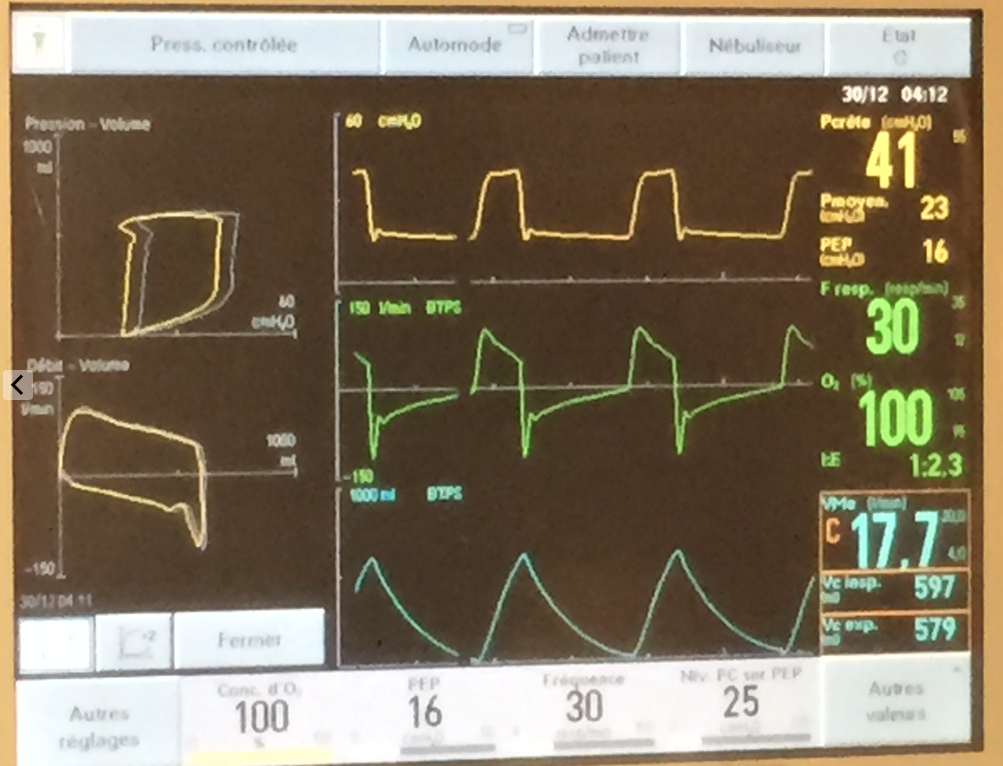
I tell the ICU to prepare a bed but I want to see her in the ED first. Twenty minutes later I put probe to patient and see a full IVC with spontaneous echo contrast. On that I tell the nurse to hold the fluids – there was a bag and tubing and a pump with 100ml/hr on it – and turn into a subxiphoid view to see a normal RV and a hypokinetic LV with some WMAs. She has marked consolidations  in both posterior lung fields and B lines laterally, with small effusions and dynamic air bronchograms (indicating patent airways). At this point she has a HR of about 120, but there is neither perceptible BP (by NIBP) nor saturation. She’s on levophed at 20mcg. She’s about an hour post arrest which was witnessed and brief (<10min to ROSC).

The theories about the arrest are possible hyperkalemia: she was intubated with succinylcholine before the K of 6.1 was back from the lab, and her pre-intubation pH was 7.0, and post-intubation she was only ventilated at 400 x 18, possibly precipitating a drop in pH and a rise in K. Her EKG had some nonspecific signs at this point, but also a poor anterior R wave.

So we head to the ICU, as instrumentation was needed. Cerebral saturation (SctO2) is 42% and ETCO2 is 20mmhg, which reassures me that the BP is probably in the measurable range (normal SctO2 is >60% and varies, but 47% is certainly viable)…  A jugular CVC with continuous ScVo2 and a femoral arterial line goes in:

screen-shot-2017-01-05-at-10-44-50-pm

So with a BP of 59/44 (ignore the 100/46, not sure whose arm that was on!) I start epinephrine, as the POCUS is similar, as I want some added beta-agonism. ScVO2 matches SctO2 in the 40’s. We get the BP up the the 90-1oo range, the ETCO2 goes to 30, the SctO2 and ScVo2 go up into the high 40’s, which is very reassuring, because with this I know that my epi drip is improving perfusion and NOT over-vasoconstricting. Without looking at a real-time tissue perfusion index of some sort or other, it is nearly impossible to know rapidly whether your therapy is helping or harming (will discuss tissue saturation & resuscitation monitoring in more detail in another post sometime soon).

screen-shot-2017-01-05-at-10-46-31-pm

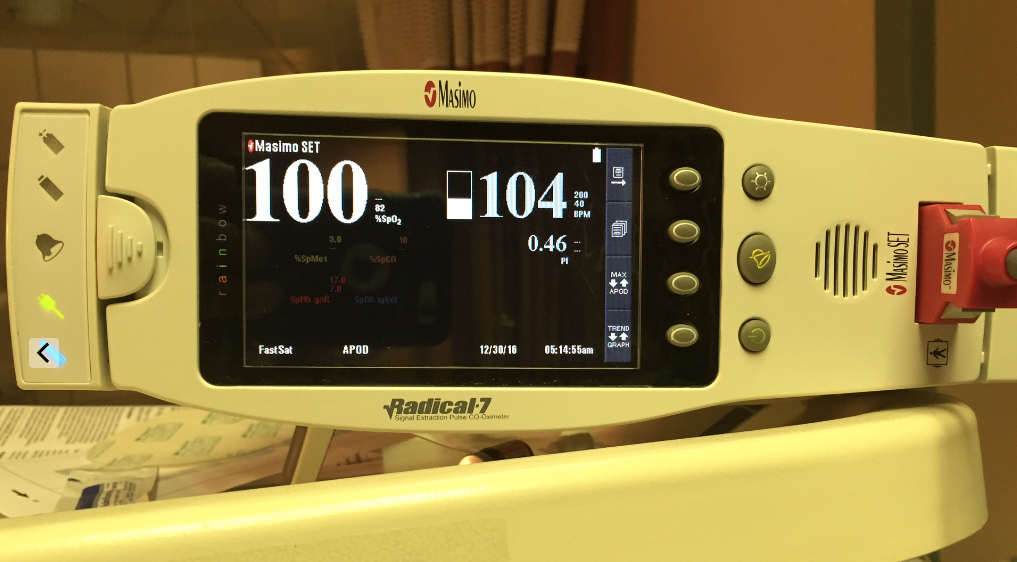
So now the sat finally starts to record in the low 60’s. We have a PEEP of 5, so start bringing it up. We hit 16 before the BP starts to drop, and that only gets us to the mid 70’s sat%. She actually squeezes my hand to command.

screen-shot-2017-01-05-at-10-45-21-pm

At this point I take a few seconds to recap in my mind. I’d spoken to the husband briefly and she had had recurrent episodes of feeling unwell with headache, nausea and diaphoresis, and that had been out for dinner earlier and she felt fine until later in the evening when this came on and eventually brought her to hospital. There was also a notion of hypertension at an ER visit a couple of weeks ago. Her history was otherwise not significant. Nonsmoker.

Pheo? Maybe, but shock?  I repeat the EKG, and now, in I and AVL, there is perhaps a 1mm ST elevation. She’s 39 and essentially dying. Lactate comes back >15, pH 6.9.  I give her a few more amps of NaHCO3. You can see the BP respond to each amp. I decide we need to go to the cath lab and get the cardiologist on call to get on the horn with the interventional team at a nearby hospital with a cath lab and ECMO, which is what I think she needs. Hb comes back at 116, making that initial 49 that prompted 2 PRBCs probably a technical or lab error…very unfortunate. There are no visible signs of significant bleeding.

But back to the patient, because this isn’t really a transferrable case.

Recap: a 39yr old woman in cardiogenic shock AND in severe congestive heart failure exacerbated by fluids and packed red cells, with a PO2 in the 40’s and sat in the 70’s.

So I decide to prone her.

screen-shot-2017-01-05-at-10-47-44-pm

Along with draining tamponades, this had to be one of the most rapid and rewarding maneuvers I’ve done. There was a scry drop of sat to the 40’s for a few seconds (may have been a technical thing), but then within a few minutes: BP to the 130’s, SctO2 to 59% and sat 100%!

screen-shot-2017-01-05-at-10-46-46-pmscreen-shot-2017-01-05-at-10-47-31-pm

screen-shot-2017-01-06-at-12-08-05-am


We dropped the vasopressors, the FiO2, and all breathed a collective sigh of relief. Now for the novices out there, prone ventilation improves VQ mismatch by moving perfusion from diseased, posterior lung fields to now-dependant, relatively healthy, anterior lung fields.

So transfer at this point was in the works. I planned to leave her prone until the last minute. The miraculous effect started to slowly wane within about 30 minutes, with sat and BP creeping down. At the time of transfer, we were back up to 80% FiO2.

So why is this?  Simple enough, this being simple pulmonary edema – rather than consolidated pneumonia – it migrated to dependent areas  relatively quickly. This was confirmed by a quick POCUS check:screen-shot-2017-01-05-at-10-48-06-pmscreen-shot-2017-01-05-at-10-48-26-pm

So in the still shots, you see a pristine “A” profile (normal, no edema) from the patient’s back, and a severe consolidation or “C” profile with ultrasound bronchograms in the antero-lateral (now dependant) chest. Impressive. (for those wanting some POCUS pearls see other posts and here). This is the reverse of her initial POCUS exam.

So we flipped her back and transported her – lights & sirens – the the cath lab, where they were waiting with ECMO cannulae. As an aside, it was quite refreshing to speak to the ICU fellow who spoke POCUS as well as french and english – it’s not usually the case, but I’m glad to see the change. I do believe it to be a direct effect of the influence of my friend and mentor, Dr. Andre Denault, one of the POCUS deities.

So she turned out to have a normal cath and a large adrenal mass. She did well on ECMO, being weaned off it today, and is now alpha-blocked and waiting for surgery, neurologically intact for all intents and purposes. A big thanks to the interventionists and the ICU team at the Montreal Heart Institute. Puts a smile on my face.


Take Home Points:

  1. don’t resuscitate without POCUS. I wouldn’t want anyone guessing with my life on the line, would you?
  2. keep pheo in mind as a cause of “acute MI” and shock
  3. if you’re not using some form of realtime monitor of perfusion (continuous CO, SctO2, ETCO2, ScvO2) then all you’ve got is looking at the skin and mentation, so you are essentially flying blind. Lactate and urine output are not realtime in real life.
  4. get ECMO in the house, it’ll come in handy. I’m working on it.


Love to hear some comments!

cheers


Philippe


ps I’ll try to add more ultrasound clips from this case in the next few days.

POCUS Course: Quebec city 2017!

Here’s a chance to learn with one of the masters in the field, my friend Andre Denault, internist-anaesthetist-intensivist extraordinaire, and a true mentor to me.

Designed for acute care docs, this is an approach to respiratory failure, shock and renal failure. I recommend it to anyone in the field!


screen-shot-2016-12-15-at-8-01-04-pm


I’ll likely be an instructor there is I can free up my schedule, so see you there!


cheers


Philippe

Bedside Ultrasound Case: Control the source. #POCUS #FOAMed, #FOAMcc, #FOAMus

So this morning a 65yr old man with shock and respiratory failure was admitted to the ICU, hypotensive on levophed and vasopressin, with a lactate over 10.

So, as usual, my first reflex was to reach for the probe to assess hemodynamics. He had been well resuscitated by a colleague, and the IVC was essentially normal, somewhere around 15 mm and still with some respiratory variation. However, scanning thru the liver, my colleague had noted a large hepatic lesion, which on CT scan (non-infused since patient had acute renal failure) the two radiologists argued whether it was solid, vascular or fluid filled.

image

Having the advantage of dynamic ultrasound, you can tell that there is some fluid motion within the structure, very suggestive of an abcess, especially in the context of severe septic shock:

So the next step was source control:


Pretty nasty. Pardon my french!

We got over 1.5 L of exceedingly foul pus.

imageimage

Within a couple of hours the lactate dropped to 3 and the levophed was down by more than half.

I think this case illustrates once again, the power of POCUS in the hands of clinicians.  While I am certain that the diagnosis would have been made without POCUS, it probably would have taken additional time as the radiologists themselves were debating its nature, and without POCUS, bedside drainage in the ICU would have been out of the question. That liter might still be in there tonight…

For those interested in how to integrate POCUS in their daily rounds, I think I put together a fair bit of clinical know-how and tips in this little handbook.


Cheers!


Philippe

Bedside Ultrasound: a primer for clinical integration. #POCUS

screen-shot-2016-10-28-at-1-11-48-am

So I had a lot of people ask me over the years to put to paper (or screen) a POCUS book, but I figured there were so many good ones out there, like my original Bible, General Ultrasound in the Critically Ill by my good friend Daniel Lichtenstein, or Vicky & Bret’s book, Emergency and Critical Care Ultrasound, that I would be trying to re-invent the wheel, and probably not doing as good a job.

But then I remembered Dubin’s EKG book, the kind of book you could almost read in a single sitting, and certainly over a few days, and get a decent grasp of the concepts and actually have some skill at the end of it.  So I figured maybe I could put together something like that for POCUS from the standpoint of clinical integration. Not so much a protocol, but how you fit your findings together in clinical syndromes, and inserting as many tips and pearls as possible.

It’s a light read, it’s irreverent, it’s kinda like #FOAM. So I hope I did a decent enough job, and I was pretty happy with the comments from a couple of respected colleagues:

Philippe has created a fantastic real-time reference for the busy practicing clinician who wishes to adopt point of care ultrasound into their working cinical armamentarium. The strength of this work is it’s immediate applicability to the clinical scenario. Dr. Rola’s extensive experience in clinical practice and teaching shines through with a concise and clinically minded approach to each scanning modality. The work is greatly enriched by many practical tips and tricks and that are often missing from larger, more formal texts. The sum of these “truths” is an important part of what transforms a clinician to an expert in the field. A final unique feature of this resource is it’s focus on integration. In Philippe’s mind, findings of differing ultrasound modalities are blended together with the patient’s clinical picture to derive a true ultrasound enhanced understanding of the patient’s pathophysiology. With characteristic plain language and descriptions, the book succeeds in taking the reader closer to that vision.

Dr. Edgar Hockmann, MD, FRCP

Dr. Rola has created the ideal compendium for contemporary healthcare professionals. Bedside Ultrasound: a primer for clinical integration concisely and intuitively describes the essentials of examining a patient in the 21st century. The guide is both unique and useful because it speaks to all levels of training for all professionals caring for patients within multiple hospital environments – the emergency department, general medical ward, operating room and intensive care unit. Dr. Rola’s succinct account of ultrasound examination leads the reader through a patient’s anatomical and physiological underpinnings using the ultrasound probe as his guide; it is a resource to be found in the pocket – virtual or otherwise – of all those interested in the future of the physical exam.

Jon-Emile Kenny M.D.

The first print run just got off the press, is on Amazon here, as is our casebook, and on our website http://www.ccusinstitute.org. The iPad version is available on iTunes here! Please give me feedback as it is important, so that the second edition just gets better!

cheers!

Philippe

Canadian Society of Internal Medicine does Lung Ultrasound!

ccus-logo

csim-logo

Happy to be hosting a satellite event for the CSIM Annual meeting taking place in Montreal.  As an internist, I’ve been long wanting to see my colleagues working on the wards integrate bedside ultrasound into their practice. After all, as an ICU guy, i try to catch the patients spiralling down. However, bedside ultrasound in the care of hospitalized patients should actually have a greater impact! Wait, I hope I’m not promoting myself out of a job here… Oh well it is for the patients’ benefit.

But it’s true, preventing deterioration is best done well…prior to the deterioration.

Anyhow, looks like we’re gonna have a pretty good day, focused on lung ultrasound:


csim-bedside-lung-ultrasound-program-2016-local-registration-only


The faculty – besides me – is excellent: Andre Denault and Georges Desjardins are pros at doing and teaching, and workshop instructors Ian Ajmo and Philippe St-Arnaud, intensivist colleagues from my shop’s team, are great too.

I’m hoping that the echo-naive participants leave fully convinced that practicing acute care without ultrasound is essentially unethical, given today’s accessibility to the technology.  I hope they can see that it out-does the most educated guesses we can muster, most of the time. Because that is what we do when held to the limitations of physical exam, even if DeGowin, Bates and Shapira were doing the physical exams themselves…

cheers!


Philippe


MOPOCUS: A great synopsis by Ha & Toh. #FOAMed, #FOAMcc, #FOAMus

Just came across this review and figured I should share. The authors make a great synopsis and review of POCUS in acute illness:

MOPOCUS Review by Ha &To

The only thing I would add to this is a more physiological way to assess the IVC, which I’ve blogged about here.  Sadly, I’ve heard a few people stating how they didn’t want to get into the dogma of IVC ultrasound, that it wasn’t reliable, etc.  The IVC doesn’t lie. It’s just not a recipe. The IVC findings have to be integrated into the rest of the echo graphic and clinical examination.  Trying to use it as a single value is akin to using serum Na+ as a diagnostic test for volume. It works only sometimes.

Please spread among the POCUS non-believers. We’ll convert them, slowly but surely. But the sooner, the better for the patients. Again, there’s no excuse to practice acute care without ultrasound. It’s not right. I’m not saying every probe-toting MD is better than one without, but everyone would up their game by adding POCUS, once past the learning curve!

cheers!


Philippe

The NYC Tracks with Jon-Emile part 2: a discussion on congestion, pulmonary and otherwise. #FOAMed, #FOAMcc, #FOAMus

So here is our second discussion, where we delve a bit into diuretic physiology, the issue of organ congestion, the myth of the “low-flow” acute renal failure associated with CHF (see earlier post), and a couple other things including a great way to determine if a patient isn’t respecting the low salt diet prescription!

I meant to, but forgot to discuss with Jon what I think is an important end-point in CHF management: the IVC. Yes, it is useful not just to make the diagnosis of congestion, but also target normalization of IVC physiology prior to discharge. It just makes common sense. If you decongest a patient just enough to get them off O2 and send them home, they bounce back a lot quicker than if you make sure you’re given them some intravascular leeway.  How do you determine this? Simple enough, make sure your IVC is down at least to below 20mm, and has recovered the classic acxvy and respiratory variation. I personally try to get into the 8-12 mm range, but that’s arbitrary. Here is some good data for 20mm:

06005

Without further due, here is the NYS Track 2:


Please share your thoughts!


cheers


Philippe

Wicked bedside US case from a CCUS Fellow! #FOAMed, #FOAMus

So a few weeks ago I was glad to meet the latest of the CCUS Fellows, Dr. Mathieu Brunet. This guy practices in the Magdalen Islands, and came to spend 3 days with me in the ICU to sharpen his bedside ultrasound skills. In fact, his technicals skills were already very good, so we spent most of the time reviewing how one integrates the bedside ultrasound data into clinical practice. We overlapped a fair bit into critical care management and resuscitation, naturally.

Well, a couple of weeks later, he tells me about a great case he’d had where he was already able to apply some of the skills he’s sharpened:

Hi Philippe,

I had this trauma case this week that I think highlights once again the usefullness of POCUS in making meaningful and timely bedside clinical decisions. Unfortunately, I didn’t save the images…

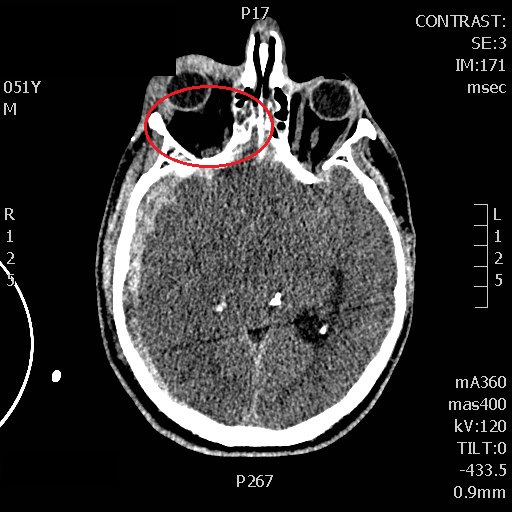
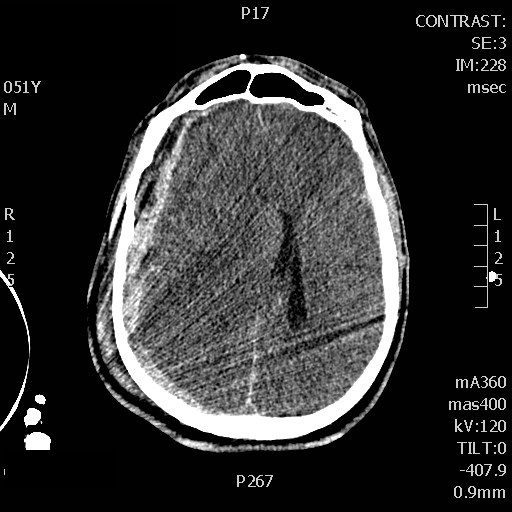
A 50 year old man was brought in by EMS after a 4 meter fall. He had isolated TBI and presented with a glascow of 5 (decorticating). An obvious right temporal deformity and a right fixed mydriasis were noted in the primary survey. My initial thoughts in the context of TBI was ongoing uncal engagement…a poor prognosis sign to say the least. However I noticed in the secondary survey a significant right periorbital ecchymosis with what seems to be a stint of exophtalmia. Was the bleeding solely preseptal, or could a retrobulbar hematoma explains the mydriasis? I reached for the ultrasound while anesthesia was intubating and was able to visualise black hypoechoic fluid in the retroorbital area. I promptly proceded to do a lateral canthotomy and a few minutes later both pupils were equal and reactive! This completly changed the momentum of the rescucitation since we were now looking at a patient with a much better prognosis then an actively herniating one! POCUS also resulted in a much shorter occular ischemia time since there would have been a significant delay if discovered only by the radiologist on CT scan.

Also, I was able to record a baseline internal carotid doppler waveform in the first minutes of rescucitation showing a markedly reduced diastolic flow (wasn’t able to find a vessel by TCD). I subsequently noticed improvement of the waveform following administration of mannitol which prompted me to be more agressive on the hyperosmolar therapy (started an hypertonic saline drip) despite the absence of clinical improvement at that time. In the next few hours, the patient waveforms further improved and the patient started withdrawing to pain.

12967343

12967400-2

The patient eventually transfered to the level one trauma center and unfortunately passed away a few days later in the neuro-ICU.

I thought that the case illustrates interesting applications of POCUS in the management of TBI and facial trauma:

1) Quick confirmation of orbital compression which can be mistaken for a third cranial nerve compression. This can be sight saving since irreversible damage occurs after 60 minutes of ischemia.
2) Assessment of the response to hyperosmolar therapy before clinical response is apparent, or in the paralysed patient.

Please share your thoughts!

Mathieu


Great job Mathieu, even if all can’t be saved. Tough case. Never having done a canthotomy, lateral or otherwise, I’m glad it was you and not me! One a serious note, I wonder if this patient had a decompressive craniotomy, which seems the only physiological therapy for the “brain compartment syndrome”  we too often seem to try to treat medically.

I completely agree with your POCUS points. Too often naysayers (always those who can’t do POCUS) say “well, we would have found it on the CT, so this ultrasound stuff really isn’t necessary.”  That is fine when time is not of the essence. In acute care, it is.

Another key point is the even greater utility of POCUS in remote areas of practice such as yours, where resources are limited, and the decision to transfer must be done rapidly and accurately.

But great use of CNS POCUS indeed. Next time save the pics and clips!!!


cheers


Philippe

CCUS Institute Bedside Ultrasound Mini-Fellowships. #POCUS #CME

The personalized CCUS Institute’s Mini-Fellowships (CME-eligible) are focused on bedside ultrasound and designed to take clinicians with some degree of proficiency in basic ultrasound to a whole other level. The opportunity to follow a seasoned clinical ER/ICU sonographer and see actual cases, learn the clinical integration of ultrasound data into decision-making is a unique one, outside of a handful of residency programs whose faculty includes experienced bedside sonographers. Basic how-to courses are great, and certainly the first step for those clinicians adding ultrasound to their armamentarium, but what we have seen, sadly, is after initial enthusiasm, many don’t really pick up the probe because the confidence to “make the call” simply isn’t there. Yet.

In a sense, it’s almost as if, as medical students, we’d read Bates, practiced physical exam on each (more or less normal ) other, and were then set out to make diagnoses and treat without having residents and attendings around to confirm our findings a few times, until we got the hang of it. Hmm. That would be rough.

Some physicians are fortunate enough to practice in a center where there are a few “veterans” of bedside ultrasound and can gain some acumen that way, but others may be the ones spearheading their institution into the 21st century, and it is from the comments of several of those, attending the CCUS Symposium (2008-2014 – perhaps a return in 2017) asking for the possibility of shadowing some of us, that the Mini-Fellowships came to be.

Mini-Fellowship Structure

Montreal Mini-Fellowship: Participants shadow one of our instructors (ICU attending) during the regular working days and discuss the cases and ultrasound-relevant aspect of each case (more often than not the case in entirety), and are able to practice their ultrasound skills. The duration is flexible although we generally suggest a minimum of two or three days. Each day would usually be about 6-8 hours, some may be more.

Toronto Mini-Fellowship: Participants get a dedicated and highly experienced preceptor (Dr. Edgar Hockmann) who is not on clinical service but with access to the ICU patients, and will provide a structured and dynamic session adapted to the participant’s needs and abilities.

The case exposure will be mainly ICU as well as ER and ward patients. The focus will be on acute care issues. After two days, participants who had a basic ability in ultrasound should be fairly comfortable with assessing volume status, cardiac function, perform lung ultrasound, be able to identify and assess intrathoracic and intr-abdominal fluid collections, assess the kidneys, bladder and gall bladder, measure optic nerve sheath, assess carotid flow and some may have exposure to trans-cranial doppler. The focus may be shifted depending on a participant’s interest.

This takes place in Montreal, Quebec or Toronto, Ontario, Canada.

Participants will have the opportunity to work with handhelds, midrange and high-end ultrasound devices.

Space is limited as we can generally only accommodate 1-3 participants per month.

CME

So, great news, finally went thru the CME process and lo and behold, the Mini-Fellowships qualify for 25 Section 2 credits (regardless of the length) and 3 hours of Section 3 credits (per day of fellowship). For you americans:

Through an agreement between the Royal College of Physicians and Surgeons of Canada and the American Medical Association, physicians may convert Royal College MOC credits to AMA PRA Category 1 Credits™. 

Bonus!

Upcoming participants will also receive a copy of the forthcoming handbook:

covercover-back

Requirements 

Please have basic experience in bedside ultrasound. We don’t want to teach you about depth and gain. We’re happy to fine tune your views but not to introduce you to the main cardiac views. It would just be wasting your clinical time. We’re here to show you how to assess pathology and integrate your findings into clinical decision-making. Take the basic group course to learn the views, or be self-taught from youtube/iphone and practicing on your patients. You don’t have to be great, but to get the most out of this experience it shouldn’t be your first time holding a probe.

Registration

email me at philipperola@gmail.com or reach out on twitter @ThinkingCC

Tuition (Updated 2022)

Montreal Mini-Fellowships: 600$ CAN / 500$ USD per day for 1 physician, 400$ CAN / 350$ USD per person per day for additional days, and 400$ CAN / 350$ USD per person per day for a 2-3 physician group (maximum)

Toronto Mini-Fellowships: 800$ per half day (4h).

100% refundable until you start. Even if you don’t show up. Really. We’re not in it for the business. We get to go home earlier if you don’t come.

Testimonials:

« I have had the chance to participate in a shadowing experience with Dr Rola at the Scarborough General Hospital ICU during two days in 2013. As a general internist and assistant program director, this experience really opened my eyes regarding the use of bedside ultrasound in general internal medicine and for IM residents. I think I would have benefited more of this experience if I had done more training previously, and I encourage future participants to do so. However, I came back from this experience with a very clear idea of the benefit of CUSE for my patients and for our residency training program. I really saw how ultrasound was used ‘in action’, in a much more realistic way than what is usually shown in CPD meetings. I also saw its limitations and the skills I needed to develop to generate good images (not something you can learn over the weekend!). Since then, I participated in formal trainings and licensing activities (more than 250 supervised US on acute care patients) and now practice bedside ultrasound autonomously. We now offer a bedside ultrasound training for our residents with the help of the emergency medicine department and an ultrasound-guided procedural simulation lab. Nothing in CPD has improved my practice and benefited the health of my patients as much as bedside ultrasound training. »

Alexandre Lafleur, MD, MSc (Ed.), FRCPC
Spécialiste en médecine interne
CHU de Québec – CHUL
alexandre.lafleur.1@ulaval.ca

“Thank you very much for the exposure and teaching offered via the CCUS “Mini-Fellowship.”  These few days allowed me to enormously improve my mastery of bedside ultrasound in clinical decision-making in critical care. I recommend the experience to clinicians already having experience in bedside ultrasound, but who feel they could benefit from the expertise of an instructor to attain a level beyond basic courses and available textbooks.”

Mathieu Brunet, MD, GP/ER/ICU, Magdalen Islands, Quebec, Canada

“The CCUS Mini Fellowship In House training is very essential in to experience the echo skills that we get from the courses,being supervised in ICU will offer the chance to be corrected and get real live practice/exposure by being at the bedside and learn what is priority in echo for the best of patient care. The in-house experience is very helpful, practical, I recommend this training to any physician involved in ER, ICU, CCU, Anesthesia and rapid response team.”

Joe Choufani, MD, Internal Medicine/Cardiology, St-Lawrence Health Association, NY

“Thanks for everything. I really appreciate you sharing your vast fund of knowledge with me.”

Sean Sue, MD, ER, Philadelphia

CME

So, great news, finally went thru the CME process and lo and behold, the Mini-Fellowships qualify for 25 Section 2 credits (regardless of the length) and 3 hours of Section 3 credits (per day of fellowship). For you americans:

Through an agreement between the Royal College of Physicians and Surgeons of Canada and the American Medical Association, physicians may convert Royal College MOC credits to AMA PRA Category 1 Credits™., #CME