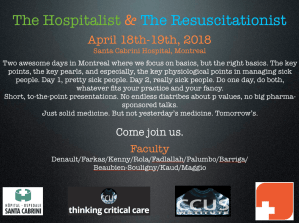
The Hospitalist & The Resuscitationist. Montreal, April 18th & 19th, 2018. #Hres2018

NOTE: THIS WAS THE H&R2018 PAGE, SO IF YOU ARE LOOKING FOR H&R2019, CLICK HERE!

So for this winter, we’ve put together a little gem of a conference which will be a mix of hospitalist and critical care medicine, both with a dash of POCUS for good measure. Our focus here will be short, to the point, highly relevant and highly physiological talks on key topics, in short, 15 minute talks.

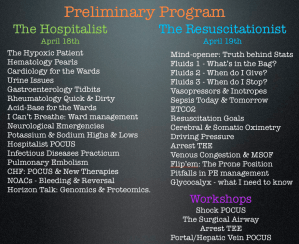
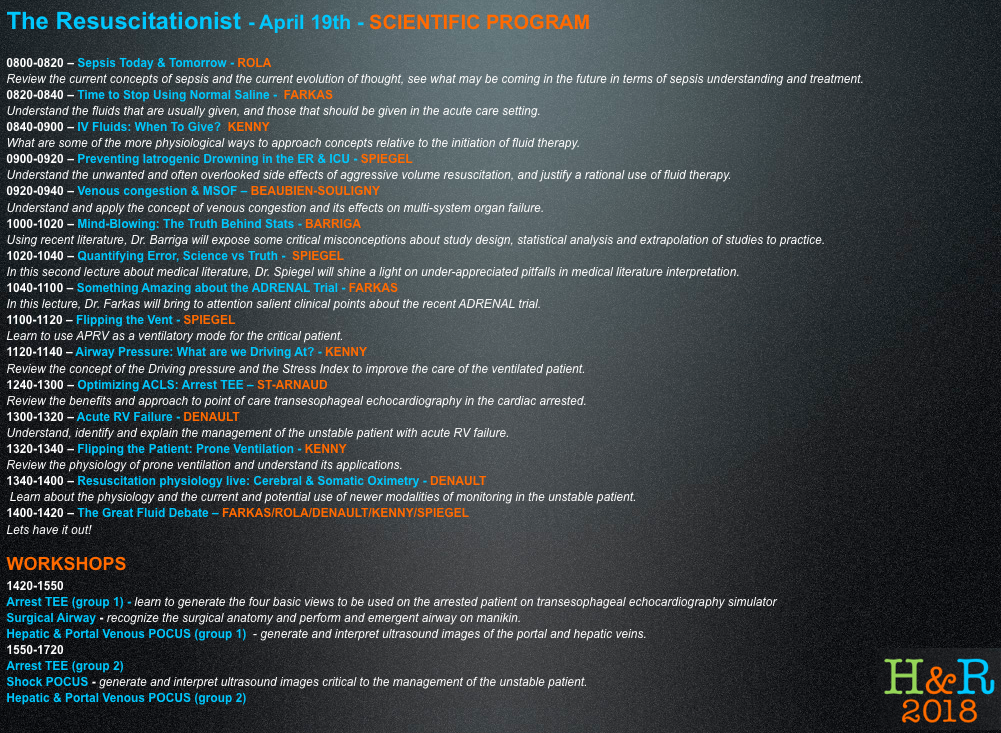
What are we going to talk about?

Day 1: The Hospitalist


Day 2: The Resuscitationist


You can figure there will also be late-breakers, “ask the crowd” talks and more.

Workshops? Sure:

Yup. You can ask for a workshop. Enough similar requests will probably make it happen. A few have already asked for Neuro-POCUS, so that is a likely addition.


So, who will be talking?  The lineup already includes Andre Denault, Josh Farkas (@Pulmcrit), Jon-Emile Kenny (@heart_lung), Rory Spiegel (@EMnerd), Hussein Fadlallah, Peter Barriga, Daniel Kaud, Davide Maggio, Michael Palumbo, William Beaubien-Souligny, and a few more to confirm. And who knows who might do an impromptu drop-in…


The short answer is yes. Of course, it does depend on what you do. If you are a hospitalist, involved in critical care or acute care of any kinds, you will find something here for you. Totally awesome for IM residents/FM residents planning on doing some hospital medicine or ICU coverage. Who will get the most bang for his or her buck here? Real docs training or working in the trenches. This isn’t a cutting edge research conference, but a cutting edge clinical application conference.


Oh yes, and the CME, of course:


This will be a small, fun conference. Space is purposely limited, for an intimate feel and to encourage discussion between peers. No need for these exclusive “meet-the-professor lunch” or anything like that: that’s what the whole event is like!


Registration is open! Print, fill, write a cheque and send the form below:

RegistrationV2

If you’re crazy busy, or have any questions, feel free to email hospresusconference@gmail.com or tweet (@ThinkingCC) to reserve a spot! 

Download the brochure here:

H&R2018 Brochure – Participants


cheers!


The H&R 2018 Scientific & Organizing Committee:

Dr. Philippe St-Arnaud – ER and Critical Care doc, POCUS instructor and constantly pushing the clinical envelope.

Dr. Carola Zambrana – our Hospitalist on the panel, constantly seeking excellence in care and working on bringing POCUS to the wards.

Dr. Mario Rizzi – our friendly neighborhood respirologist and educator.

Dr. Philippe Rola – Critical Care doc, long time POCUS aficionado and instructor, working at bringing POCUS into the everyday physical exam.


Fluid Stop Points! More POCUS goodness from Korbin Haycock. #FOAMed, #FOAMcc

I am really enjoying this exchange, and I think it is in the true spirit of #FOAMed to foster these discussions, as we have the opportunity to combine and fine tune our understanding of a topic from several really bright people’s view and experience. 

Korbin:

Jon-Emile, excellent points and insight. I should clarify a couple of my comments. To be specific, by “renal vein flow” I am referring to intra-renal venous flow. Apologies for my imprecision! Thanks for pointing that out.

Yes, a lot of these renal and portal Doppler patterns are surrogates of CVP. But I don’t think any of us would use CVP in isolation these days to make any decision what-so-ever on whether fluids were indicated in our patient.

Also, to clarify, I am not using intra-renal venous flow or renal resistive index as measures of non-fluid responsiveness. Rather, I use these measures as a stop point for attempting to solve the patient’s hemodynamic dysfunction with crystalloid regardless of whether or not my straight leg test tells me the patient is still fluid responsive.

And that is a key re-iteration to me. It is important to set these stop points and not only look at whether the cardiac output can be maximized. This has been tried. And failed. Let’s remember that sepsis is not inherently a disease of low flow. It isn’t cardiogenic or hypovolemic shock at the core.

My rationale for the strategy of using intra-renal Doppler, E/e’, and Lung US (now, I can include portal vein pulsatility) as a stop point for IVF administration is that I think the patient is best served to avoid iatrogenic edema of the upstream organs, primarily the lungs and the kidneys. These are the two organs (maybe you could put the endothelium in this category as well–glycocalyx being a whole other can of worms!) most easily damaged by the chase for optimizing every bit of fluid responsiveness. We have good evidence that getting wet lungs and swollen, congested kidneys is a bad thing, and we have these tools to hopefully warn us when we are pushing things too far.

Absolutely. And the whole glycocalyx is something to keep in mind, even if only to me mindful to disrupt it as little as possible.

Of course renal resistive index, intra-renal venous flow, portal vein pulsativity, and whatever else you like will have limitations and confounders. As long as you understand what can cause abnormalities with these tools, you can make an educated guess as to what’s going on. If our creatinine is off and our RRI is high, but intra-renal venous flow and portal vein flow is normal, perhaps the RRI is caused by something other than renal congestion, like ATN. If the portal vein is pulsatile, but the Doppler patterns of the hepatic vein, kidney and the heart look ok, maybe something else is wrong with the liver. But, if all our modalities are in agreement and pointing to congestion, we should perhaps believe that it’s congestion and stop the fluids. 

That is an awesome approach to integrating RRI. I’ve been toying with it for the last couple of days, and much thanks to Korbin, I think that the limitations of RRI can be overcome by using the rest of our clinical and POCUS data.

It isn’t a hard technique, though in some patients getting a good signal can be tricky.

I think that the kidney, being an encapsulated organ, and the fact that much of our crystalloid ends up as interstitial edema, the kidney will develop sub-optimal flow patterns before CVP would cause congestion. The same is true regarding the lung, except that it’s just related to increased pulmonary permeability due to inflammation. Regardless, the idea is to save organs, and the earlier you can detect the problem, the sonner you can stop battering the more delicate organs with fluid.

As I think we have all mentioned, you really have to look at the whole picture, and put it together to tell the story of what is wrong, so we can logically and thoughtfully treat our patients.

I really appreciate this discussion. Thanks!


Thanks to Andre, Jon and Korbin for making this very educative for all!

Cheers


Philippe


ps don’t miss the POCUS Workshops on venous assessment at  !!!

Portal Vein POCUS: A Reader’s Case and a Follow-Up to the Denault Discussion

So I’ve been meaning to post a follow up and discussion about portal vein POCUS and how I am integrating it so far, and a few days ago I got a really interesting comment from Dr. Korbin Haycock, and I think it’s got some awesome elements to discuss.

Before we get into it, I would invite anyone reading this to go listen to the original Denault Track here, without which this discussion would be missing some elements.

What we are looking at here is the physiological assessment of venous congestion, and how doppler interrogation of the portal vein may help us. So here is Korbin’s case, and I will interject (in bold) where I think a point can be made, or at least my thoughts on it.

“Awesome post. Awesome website. I had never heard about portal vein pulsatility until reading your blog. I have previously been looking at the renal resistive index and renal vein Doppler pattern in my hypotensive/shock patients (along with doing a bedside ECHO and POCUS pulmonary exam) to guide when to stop fluid resuscitiation.

Very impressive. I have only ever heard of a handful of resuscitationists looking at this (including Andre, and consequently myself) so I’m gonna have to have a chat with this fellow soon! For those who have not tried or are not familiar, some basic info can be found here. I’ll have to review this, but I think one issue with RI is that there is an associated ddx, so that without knowledge of baseline, I would not be certain how to use it. Renal vein doppler seems very interesting to me, as that venous path is the one of the cardiorenal syndrome (forget about all that “low flow” nonsense in CHF – not in shock – patients), and there is clearly bad prognosis associated with abnormal (discontinuous) flow patterns. Here is a really good study (Iida et al)  and its editorial (Tang).

Iida Doppler_CHF Heart Failure JACCHF 2016

Tang Editorial JACCHF 2016

I had a case last night that I think illustrates that fluid administration can be the wrong thing to do in some septic shock patients. Plus, I got to try something new and look at the portal vein for pulsatility.

My case was a gentleman in his late 60’s with a history of HTN, atrial fibrillation and HFrEF who presented with three days for a productive cough and fever. POC lactate was 2.7. His HR was 130-140’s, in atrial fibrillation, febrile, MAP was 50, and he looked a bit shocky and was diaphoretic. The resident had started antibiotics and a fluid bolus of LR, of which not much had gone in (maybe 200cc) when I came to start a night shift and evaluated the patient. I asked that the fluids be stopped until we could have a look at him.

His IVC was about 1.5-2 cm with >50% collapsibility.

So I’m gonna hit the pause button right there for a couple of comments. That’s not a hypovolemic IVC. The RAP may be raised by some of the  It may very well be volume responsive, but I think the first thing to go for is correcting that tachycardia. The antibiotics are definitely the right call, but the fluids should, in my opinion, be held until assessment for volume tolerance is done.

His LV looked to have some mildly decreased EF and was going very fast. RV looked normal. His average SV was 45, CO was 6.1, E/e’ ratio indicated a slightly elevated left atrial pressure. His estimated/calculated SVR by the ECHO numbers was about 550. Lungs were dry anteriorly, without B-lines, but PLAPS view was c/w bilateral lower lobe PNA. Renal vein Doppler was biphasic and the resistive index was very high. I looked at his portal vein and it was pulsatile.

Excellent. So there is pulmonary pathology, which makes fluid tolerance already of concern. The CO is certainly adequate and SVR is low, suggesting a vasodilatory shock etiology. 

In the past, based on the IVC and the way the RV looked, I would have done a straight leg raise or given a given some crystalloid to see if his SV and BP improved, and if it did, give some IVF. Instead, I told the staff to given no more fluids and I gave him 20 mg of diltiazem.

His heart rate decreased from 130-140’s to 90. His averaged SV increased to 65 (probably due to increased LV filling time and better diastolic perfusion time), CO was 5.9, estimated SVR was 570. The renal and portal vein Doppler were unchanged. The MAP didn’t bulge and stayed low at 50-55. At this point I ordered furosemide and but him on a norepinephrine infusion to increase the SVR, first at 5 mcg/min, then 7 mcg/min.

Totally awesome to see. It isn’t unusual for me to diurese patients in vasopressor-dependant shock, as more and more data is emerging on how venous congestion has deleterious effects on the gut and may even contribute to the SIRS-type state. And once a patient is in a euvolemic to hypervolemic state, the only fluid they get from me is the one containing norepinephrine. Maintenance fluid is not for critically ill patients IMO.

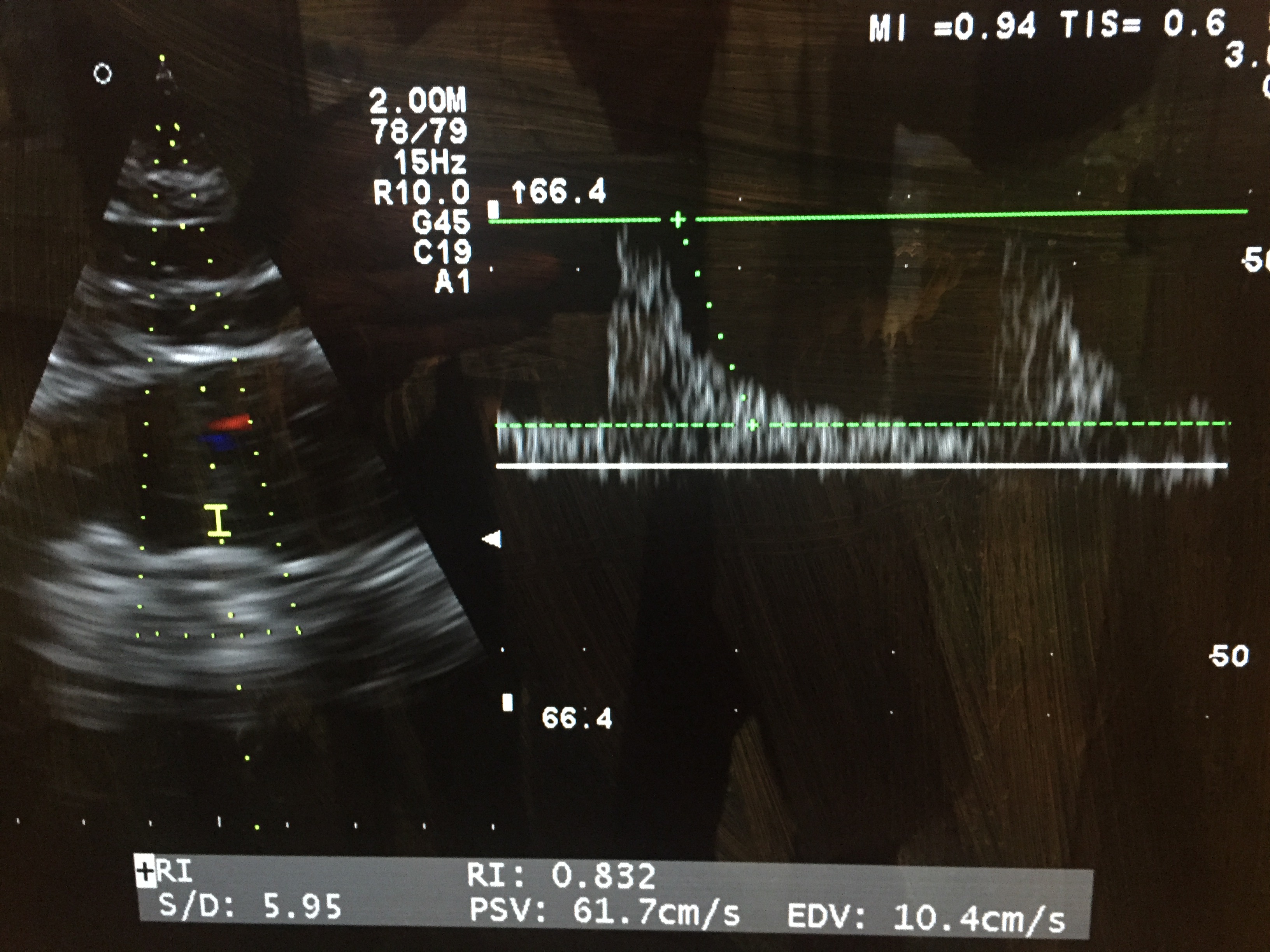
The NE gtt increased his MAP to 75 mmHg. His SV was 80, CO 7.1 (I was a little surprised it didn’t go down a bit), estimated SVR was 700. I had his labs back at this point and his creatinine was 1.8 and the last creatinine we had was 1.1 a few months ago. His renal vein pattern was still biphasic and his renal resistive index was also still quite high at 0.89, which would probably predict a significant kidney injury in 2-3 days.

Even though his MAP and hemodynamics looked great, I was worried about the renal resistive index. I ordered a little more furosemide and started him on a little bit of a vasopressin infusion. After things settled down, MAP was 75-80, his average SV was 80, CO 7.3, estimated SVR was about 800, and his renal resistive index (RRI) was 0.75. He looked much better too. The second lactate was 1.3.

Very interesting to see the drop in RRI.  Great case to show how you don’t need to chase lactate with fluids. That is an antiquated knee-jerk reflex hinging on the concept that hyperlactatemia is primarily due to tissue hypoperfusion, which we have learned is not the main cause. 

This morning his creatinine had improved to 1.3 and he is doing well.

South of your border, CMS considers me a bad doctor for not giving 30 cc/kg crystalloid as a knee jerk reaction and instead giving a diuretic and early vasopressors as we did in this patient. Just looking at his IVC would indicate that IVF would be a reasonable strategy. If I had done a SLR or fluid challenge and found him fluid responsive, in the past, I would be temped to chase every bit of fluid response with pushing more fluids, but the renal and portal vein Doppler made me stop fluids in this patient this time. I think this example illustrates the importance of looking at each of your patients on a case by case basis and looking at the whole picture (heart, lungs, kidneys, now portal system too for me!), rather than following protocols.

Kudos. 


So then, Andre decides to chime in as well:

Very interesting but be careful about the interpretation of portal pulsatility because it can be falsely positive particularly in hyperdynamic young patient, which was may be not the case. We published an algorithm in order to identify the true portal pulsatility associated with right heart failure and fluid overload and a normal portal vein with pulsatility:

Tremblay Portal pulsatility Flolan Mil AACR 2017

(Tremblay 2017 A&A care report) A & A Case Reports. 9(8):219–223, OCT 2017 DOI: 10.1213/XAA.0000000000000572 , PMID: 28604468)

The latter will be associated with normal RV even hyperdynamic, normal hepatic venous and renal flow, normal IVC. We still need to explore the significance of portal hypertension outside the area of cardiac surgery where we are finalizing our studies.

Always tell my residents and fellow, treat the patient and not the number or the image. That being said, the patient got better so cannot argue with success.

So I think this is a really important point, that it can become dangerous in POCUS to look for a simple, single-factor “recipe” with which to manage the patient, when in fact you can have many factors which, integrated, can give you a much better understanding about your patient’s pathophysiology.

My take on portal vein POCUS so far is that it is a marker of critical venous congestion, beyond simply a plethoric IVC. I think it is wise to stop fluids before the plethoric IVC, but a plethoric IVC with a pulsatile PV should bring fluids to a screeching halt and some decongestive therapy started. The data for this?  Andre is cooking it up, but in the meantime, there is plenty of evidence that congestion is plenty bad, and NO evidence that maximizing CO works at all, so I am very comfortable in witholding fluids and diuresing these patients. 

For fun, here is a little figure from Tang et al about the doppler patterns discussed.

Love to hear everyone’s thoughts!

and for those interested, there will be a workshop run by Andre and myself on this at :

more to come on this soon…

cheers


Philippe

Emergency Pericardiocentesis post-arrest (Part 1). #FOAMed, #FOAMus, #FOAMer

So a few nights ago I got pulled out of slumber to rush to the ER for an elderly patient who had arrested in hospital shortly after having been brought in for chest pain. The sharp ER doc had diagnosed a tamponade on a presumed aortic dissection, managed to get a needle in, aspirated some fluid and managed to get ROSC.

So when I got there we had a patient post-ROSC in rapid atrial fibrillation with a thready but palpable pulse. POCUS showed a large pericardial effusion with minimal LV filling. So here is what we did:

With the catheter in, we were able to drain. Note a couple of POCUS teaching points, always make sure to (1) visualize your guidewire in the right space, and (2) second, when using a dilator, you can note the disappearance of the proximal part of the guidewire as it is covered by the dilator. This tells you you have adequately dilated into the target structure – pericardium in this case, because it is possible (personal experience) to advance a dilator fairly deep, but not go through a perhaps fibrotic pericardium, and then result in pigtail mis-placement just outside of the target.

In part 2 you can also see the aspiration of the effusion and improved LV filling. The patient’s BP instantly rose to 140’s systolic.

More case details and POCUS teaching points to come in part 2.

cheers,

ps – a sterile probe cover was unavailable immediately in the ER. By the time it showed up the pigtail was in. We didn’t feel we could wait. We doused it in alcohol.

Philippe


A Discussion on Fluid Management Protocols with Rory Spiegel. #FOAMed, #FOAMcc, #POCUS


So Rory (@EMnerd) is in the process of working on a fluid resus protocol for Shock-Trauma, and asked me if we could have a chat about it, which I feel very honored for – and had a brief impostor syndrome crisis – but it’s always great to chat with people who are really bright, really physiological and after the same goal, to make patients better. Always a pleasure to chat with Rory, so here it is.

I really can’t wait to see their protocol, because I think this is a huge and complex endeavor, but has to be done.  I will try to put pen to paper (probably really pixels to a screen but that doesn’t sound as good) and put what I try to do for fluid resus on a diagram of sorts.

Love to hear comments and questions.

PS please skip the first 30 seconds which are a technical blank… Ièm not tech saavy so can’t trim it!

cheers!

Philippe


A great comment by Dr. Korbin Haycock

One issue to consider is the degree of pulmonary vascular leakage. If, as in the case of sepsis, the pulmonary vasculature is more prone to the development of lung interstitial edema, lower LVEDP’s possibly will still result in as much lung wetness as higher LVEDP’s. Therefore, reliance of E/e’ ratios may not be the best measure of a fluid resuscitative endpoint in sepsis (and aren’t we really talking about sepsis resuscitation here?). I believe that it’s relatively clear that EVLW will adversely affect outcomes, but pushing for every bit of increased stroke volume/fluid responsiveness is less clear to be beneficial, even if it makes sense from a DO2/VO2 perspective (which may not be the real issue in sepsis anyway, as mitochondrial utilization of the DO2 provided may be the real problem, rather than DO2/VO2 balance). If the assumption is that the kidneys and lungs are the most delicate organs and most at risk to over aggressive fluid administration, and will impact mortality/LOS in the ICU, perhaps a combined strategy of attention to E/e’ ratios, development of B-lines, or the renal resistive index increasing would be a signal for a different strategy rather than fluids to increase venous return (i.e. switching from crystalloids to norepinephrine or vasopressin if the CO is elevated and will tolerate a minor ding from the increase in SVR). If any of those three variables indicate a problem, stop the fluids, switch to a vasopressor. If the issue is the CO rather than the SVR, use an inotrope instead. Of course RV/LV interactions as mentioned in the comments above must be considered. No point in giving fluids to an empty LV if the RV is failing–you’ll just congest the kidneys.

To POCUS or not to POCUS… No, that is NOT the question! #FOAMed, #FOAMus, #FOAMer

So a few weeks ago I got into some twitter debates after I – not uncharacteristically – stated that, in my opinion, practicing acute care today without using/learning POCUS  is unethical. Now I was hasty, and, in my wording did not exclude those docs who simply do not have access to the technology, and I apologize for that. For the rest, however, I totally stand by my words.

So there was a bunch of smart people who exhibited the monosynaptic reflex of asking for the evidence, the studies, or else brandishing some that showed that some aspect or other of POCUS is flawed, or some anecdote about misdiagnoses, bla, bla, bla…

Now this time, I’m going to start the discussion with the bottom line, in a sense, and leave the nitty gritty for later (which is actually the most important part, tho). But here it is:

Unless you think that the addition of ultrasonography cannot perform more accurate and rapid diagnoses than you can with your inspection/palpation/percussion/auscultation, you cannot rule against POCUS. 

Now if you actually believe that, the corollary would be to never ask for an echocardiogram, abdo-pelvic ultrasound, etc… Not too many takers. Thats what I thought.

What you can challenge, however, is the process of POCUS, meaning how do you get Dr. John Doe competent enough to make a call of pathology X (for the diagnostic aspect) and how do we clinically integrate and act on the POCUS findings, many of them being “new” from increased sensitivity, what do they mean, what does their evolution mean? Many good questions there.

That’s why I lament the entire debate around POCUS. These smart people should focus their neurons on helping us fine-tune POCUS instead.  POCUS is a huge, exploding field. I’m pretty POCUS-comfortable, but don’t ask me to start looking at bones and tendons and ligaments and a myriad of other applications. There’s not much in the body we can’t get some ultrasound into, so all those represent areas of additional information to be assessed.

The education process is also clearly in need. I’m on a panel of the Quebec College of Physicians whose mission is to put some parameters around POCUS. There’s no holding it back, it’s just about getting it going in the right direction.

It’s like anything else in medicine. We have no perfect tools, because we are working with a hypercomplex system with many variables.

And speed. Anyone interested can scan thru the POCUS cases on my blog, and what you see every time is the speed and accuracy that POCUS brings. Studies are hard, and complex. POCUS is not a single intervention, so measuring impact is difficult. Let’s say we have a septic patient with an obstructed kidney. POCUS will assess the hemodynamics, guide fluid resuscitation and inotrope use, but also find the probable source quickly, then perhaps make sure there is no gastric distension prior to intubation, confirm ETT and CVC placement, and more as the evolution goes. How do you make an RCT around that?  It is, however, a good idea to validate every aspect (which has essentially been done already, but certainly there is more to do).

Sadly, most of the naysayers, in my experience, are not echo-competent and likely don’t want to feel like med students all over again, learning a complex skill from scratch, and instead are crossing their fingers hoping that somehow, ultrasonography will be discredited… Yup, it’s not just a river in Egypt.

POCUS is a work in progress. It won’t go away. Hop on and give us a hand. Your patients will benefit.


cheers!

Philippe

Bedside Ultrasound Quiz Part 1: a 50 yr old man with dyspnea, acidosis, hepatitis and leg edema. #FOAMed, #FOAMer, #FOAMus

So last night, an interesting call from the ED about a 50 year old man who presented with a 3 week history of increasing dyspnea, leg edema, temp of 39,  a lactate of 3.9, an INR of 1.7, elevated LFTs and a WBC of 18, but a BP of 130/75.

Fortunately, I was dealing with a saavy ER doc with some POCUS capabilities, so he also told me he saw a pretty big IVC and he was a bit leery about giving fluids, though this looked like pretty severe sepsis with 3 or 4 affected organ systems…

So I asked him to hold fluids until I got there. Here is what POCUS found:

He revealed a past history of untreated hypertention, and a flu-like illness 3-4weeks ago.

What’s the diagnosis (-es) and management?

Answers & Clinical evolution in part 2 tomorrow!


cheers


Philippe


Hepatic Portal Venous Gas (HPVG): a Less Ominous Sign than We Thought? A Case of HPVG associated with massive PE… #FOAMed, #FOAMcc

So a few years ago I had a patient in the ICU, post op for some abdominal surgery, and, using POCUS, I detected a hyper echoic area in the liver, in a wedge shape.  I scanned the patient and, lo and behold, there was a matching area of air-filled hepatic venous sinuses on CT scan. Well, my surgical colleague and I were very concerned and proceeded to inform the patient he would be needing exploratory surgery for what was likely ischémie bowel. He essentially – though in more polite words – told us we were idiots and that his belly felt fine and he didn’t think surgery would be needed at all.

His belly did feel fine. So were his labs. So we worried, but, given this whole thing about free will and consent, etc, couldn’t very well force him into what we felt was necessary surgery.

The next day he was fine. On POCUS, the area of air had shrunk. The next day, it was gone altogether.

We thanked him for his keen clinical acumen and for teaching us a good lesson.

However, we were a bit perplexed, because traditional teaching equated portal venous air with a severe bowel disorder, usually ischemic or inflammatory, with exceedingly high mortality. At least that is what we had been fed. We are both grads of 1999. Hmmm…

So over the next few years we saw a few of these cases, sometimes bad, sometimes not, and a review of the literature (see below)  showed an interesting evolution of the disease. Described in the 1950’s on plain films, hepatic air was a bad omen indeed, with mortality in the 75-90% range. In the CT era, the mortality started to “drop” to the 35-60% range. Now you can find quite a few reports of “surprisingly” good outcomes with conservative management. So this evolution doesn’t represent a change in severity so much as the technological capability to detect smaller and smaller amounts of air in the venous system – just increased sensitivity. And now, with POCUS – ultrasound is the most sensitive detector of air in a vascular tree – the associated mortality is likely to take another drop, not only because of our ability to detect very small amounts of air, but also because we are actually looking at the area, and also in a wider range of patient’ pathologies that those commonly associated with HPVG.


Clinical Case: HPVG and PE!

So a couple weeks ago I saw a patient in the ED who’d recently broken an ankle, had her foot put in a boot and managed conservatively and came back dyspneic and tachycardic. Here are a couple of clips:

As always, I start with the IVC:

Big & fixed.

Hepatic veins:

Biphasic flow.

Femoral veins:

So here the source of the problem is pretty clear, a large common femoral DVT.

She wasn’t very echogenic so I don’t have great clips of the heart but she had a dilated and hypocontractile RV with a McConnell’s sign (preserved apical contraction), small and hyper dynamic LV with septal flattening.

Now here is where it gets interesting, the portal vein:

You can clearly see bubbles traveling up the portal vein. Ominous, or not?

So clinically, her abdomen was normal, she had no abdominal symptomatology at all…


Pathophysiological musings:

So the severe RV obstruction resulted in significant venous congestion. Additionally, the decreased cardiac output – as manifested by a lactate of 4 and mild tachycardia/hypotension (110 HR, BP sys 90’s) was clear.

The etiology of HPVG in the literature isn’t clear – mucosal disruption, bacterial gas are all mentioned but as far as I could find, no definitive answer.

Is it possible that there is a “normal” inward leak of mucosal gas that is normally fully dissolved in the venous bloodstream, but that, in cases of low flow and/or venous congestion, the dissolution capacity (per unit time) decreases, and that gas comes out of solution?  Alternately, those who have increased intraluminal pressure (gastric distension, etc), the increased transmembrane gas driving pressure may overload an adequate blood flow…

This would explain the benign course of many patients, particularily those with gastric dilation.


Clinical course:

Based on hemodynamics, tachypnea and, to some degree, venous congestion, I decided to thrombolyse her using 1/2 dose lytics. Within a couple of hours her HR decreased to the 90’s and BP rose to 110 systolic.  Echographically, however, the IVC/RV findings remained similar, but the HPVG decreased. By the next day, HPVG was altogether gone, lactate had resolved and dyspnea was significantly better.


Take Home Message:

HPVG, although not quite as poor a prognostic sign as once thought, nonetheless warrants concern and investigation, even if the abdominal exam is entirely normal and without symptomatology, as correction of an underlying cause of “benign” HPVG (whether low-flow or bowel distension) would still need to be addressed.

In the meantime, I suspect that, reported or not, this has been noted by other POCUS enthusiasts, since we are now looking more frequently at this area, and are dealing with patients with low-flow states, congestion, bowel obstruction/ileus or more than one of these.

Hopefully some investigators will take a look at this phenomenon and delineate the pathophysiological mechanism!

Love to hear of your experience with this.

cheers!


Philippe

For those interested in POCUS, see here for a quick read primer on clinical applications of POCUS.


HPVG Review article 2009:

wjg-15-3585


Wicked Clinical Case: POCUS & Prone save the day! #FOAMed, #FOAMcc, #FOAMer

So I get a call from a colleague in the ED at about 2am, telling me about a 39 yr old woman post-arrest. So I start putting on my boots and warming up the car (it’s January in Montreal folks).  Apparently she had presented earlier in severe acidosis, the diagnosis is unclear, but she apparently got 2 units for an Hb of 49, then went into respiratory failure and got intubated. She arrested about 30 minutes later, cause unknown.

I tell the ICU to prepare a bed but I want to see her in the ED first. Twenty minutes later I put probe to patient and see a full IVC with spontaneous echo contrast. On that I tell the nurse to hold the fluids – there was a bag and tubing and a pump with 100ml/hr on it – and turn into a subxiphoid view to see a normal RV and a hypokinetic LV with some WMAs. She has marked consolidations  in both posterior lung fields and B lines laterally, with small effusions and dynamic air bronchograms (indicating patent airways). At this point she has a HR of about 120, but there is neither perceptible BP (by NIBP) nor saturation. She’s on levophed at 20mcg. She’s about an hour post arrest which was witnessed and brief (<10min to ROSC).

The theories about the arrest are possible hyperkalemia: she was intubated with succinylcholine before the K of 6.1 was back from the lab, and her pre-intubation pH was 7.0, and post-intubation she was only ventilated at 400 x 18, possibly precipitating a drop in pH and a rise in K. Her EKG had some nonspecific signs at this point, but also a poor anterior R wave.

So we head to the ICU, as instrumentation was needed. Cerebral saturation (SctO2) is 42% and ETCO2 is 20mmhg, which reassures me that the BP is probably in the measurable range (normal SctO2 is >60% and varies, but 47% is certainly viable)…  A jugular CVC with continuous ScVo2 and a femoral arterial line goes in:

screen-shot-2017-01-05-at-10-44-50-pm

So with a BP of 59/44 (ignore the 100/46, not sure whose arm that was on!) I start epinephrine, as the POCUS is similar, as I want some added beta-agonism. ScVO2 matches SctO2 in the 40’s. We get the BP up the the 90-1oo range, the ETCO2 goes to 30, the SctO2 and ScVo2 go up into the high 40’s, which is very reassuring, because with this I know that my epi drip is improving perfusion and NOT over-vasoconstricting. Without looking at a real-time tissue perfusion index of some sort or other, it is nearly impossible to know rapidly whether your therapy is helping or harming (will discuss tissue saturation & resuscitation monitoring in more detail in another post sometime soon).

screen-shot-2017-01-05-at-10-46-31-pm

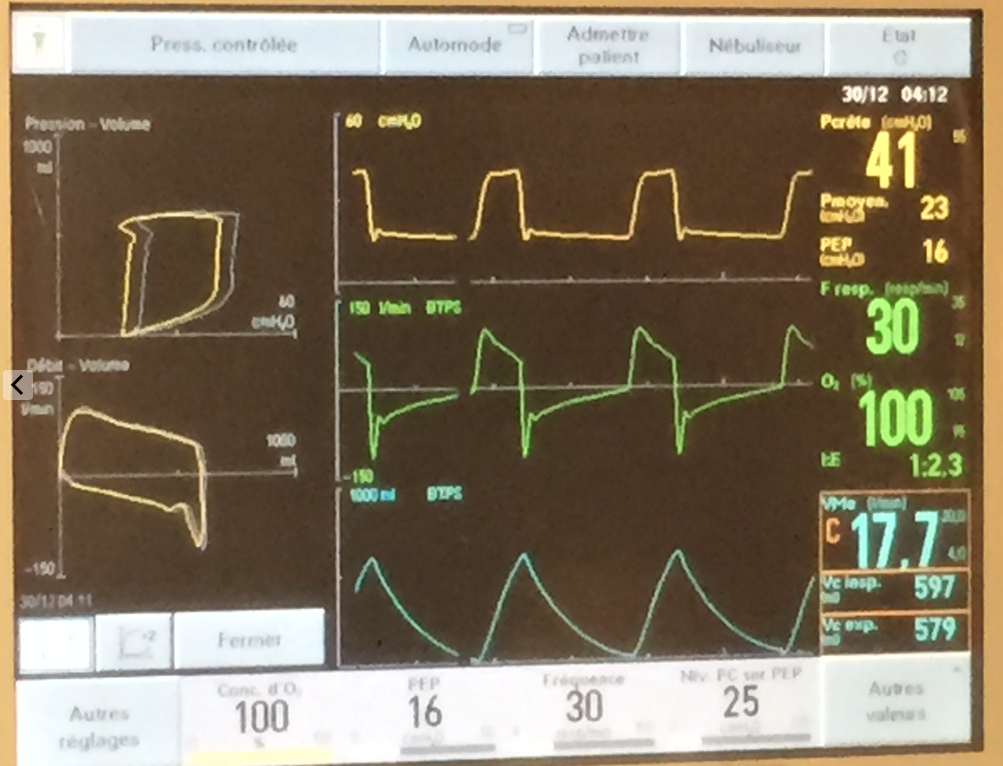
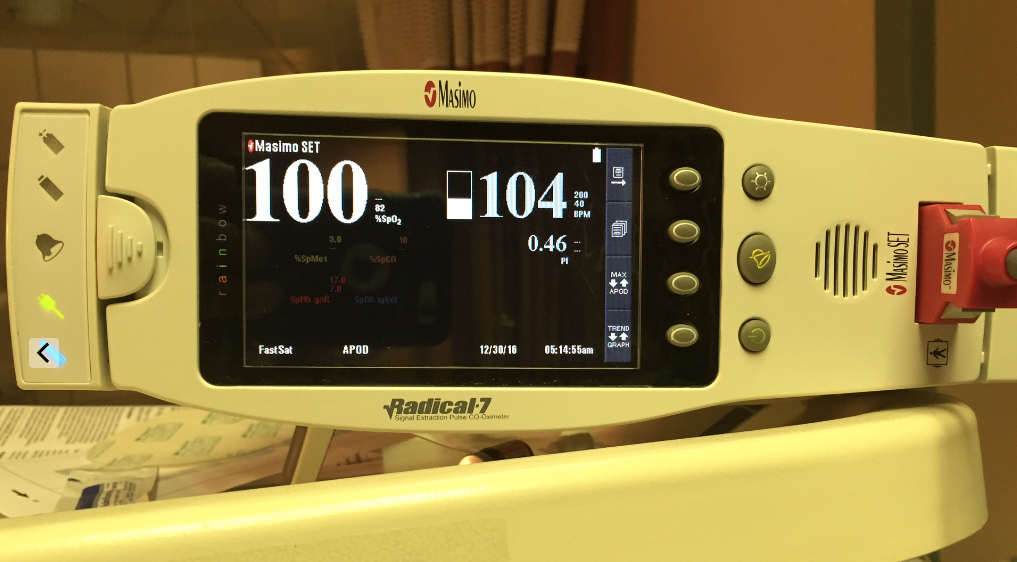
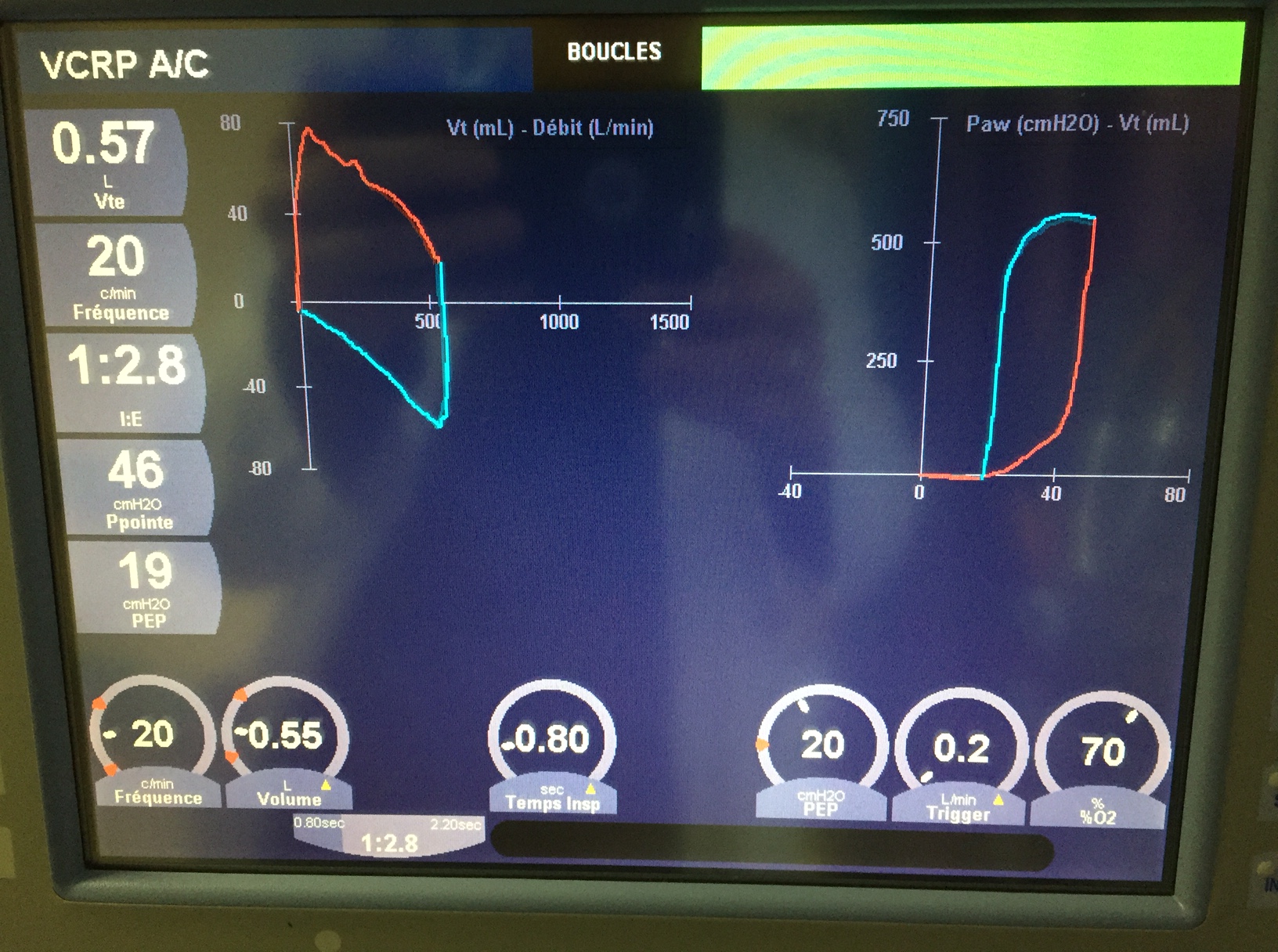
So now the sat finally starts to record in the low 60’s. We have a PEEP of 5, so start bringing it up. We hit 16 before the BP starts to drop, and that only gets us to the mid 70’s sat%. She actually squeezes my hand to command.

screen-shot-2017-01-05-at-10-45-21-pm

At this point I take a few seconds to recap in my mind. I’d spoken to the husband briefly and she had had recurrent episodes of feeling unwell with headache, nausea and diaphoresis, and that had been out for dinner earlier and she felt fine until later in the evening when this came on and eventually brought her to hospital. There was also a notion of hypertension at an ER visit a couple of weeks ago. Her history was otherwise not significant. Nonsmoker.

Pheo? Maybe, but shock?  I repeat the EKG, and now, in I and AVL, there is perhaps a 1mm ST elevation. She’s 39 and essentially dying. Lactate comes back >15, pH 6.9.  I give her a few more amps of NaHCO3. You can see the BP respond to each amp. I decide we need to go to the cath lab and get the cardiologist on call to get on the horn with the interventional team at a nearby hospital with a cath lab and ECMO, which is what I think she needs. Hb comes back at 116, making that initial 49 that prompted 2 PRBCs probably a technical or lab error…very unfortunate. There are no visible signs of significant bleeding.

But back to the patient, because this isn’t really a transferrable case.

Recap: a 39yr old woman in cardiogenic shock AND in severe congestive heart failure exacerbated by fluids and packed red cells, with a PO2 in the 40’s and sat in the 70’s.

So I decide to prone her.

screen-shot-2017-01-05-at-10-47-44-pm

Along with draining tamponades, this had to be one of the most rapid and rewarding maneuvers I’ve done. There was a scry drop of sat to the 40’s for a few seconds (may have been a technical thing), but then within a few minutes: BP to the 130’s, SctO2 to 59% and sat 100%!

screen-shot-2017-01-05-at-10-46-46-pmscreen-shot-2017-01-05-at-10-47-31-pm

screen-shot-2017-01-06-at-12-08-05-am


We dropped the vasopressors, the FiO2, and all breathed a collective sigh of relief. Now for the novices out there, prone ventilation improves VQ mismatch by moving perfusion from diseased, posterior lung fields to now-dependant, relatively healthy, anterior lung fields.

So transfer at this point was in the works. I planned to leave her prone until the last minute. The miraculous effect started to slowly wane within about 30 minutes, with sat and BP creeping down. At the time of transfer, we were back up to 80% FiO2.

So why is this?  Simple enough, this being simple pulmonary edema – rather than consolidated pneumonia – it migrated to dependent areas  relatively quickly. This was confirmed by a quick POCUS check:screen-shot-2017-01-05-at-10-48-06-pmscreen-shot-2017-01-05-at-10-48-26-pm

So in the still shots, you see a pristine “A” profile (normal, no edema) from the patient’s back, and a severe consolidation or “C” profile with ultrasound bronchograms in the antero-lateral (now dependant) chest. Impressive. (for those wanting some POCUS pearls see other posts and here). This is the reverse of her initial POCUS exam.

So we flipped her back and transported her – lights & sirens – the the cath lab, where they were waiting with ECMO cannulae. As an aside, it was quite refreshing to speak to the ICU fellow who spoke POCUS as well as french and english – it’s not usually the case, but I’m glad to see the change. I do believe it to be a direct effect of the influence of my friend and mentor, Dr. Andre Denault, one of the POCUS deities.

So she turned out to have a normal cath and a large adrenal mass. She did well on ECMO, being weaned off it today, and is now alpha-blocked and waiting for surgery, neurologically intact for all intents and purposes. A big thanks to the interventionists and the ICU team at the Montreal Heart Institute. Puts a smile on my face.


Take Home Points:

  1. don’t resuscitate without POCUS. I wouldn’t want anyone guessing with my life on the line, would you?
  2. keep pheo in mind as a cause of “acute MI” and shock
  3. if you’re not using some form of realtime monitor of perfusion (continuous CO, SctO2, ETCO2, ScvO2) then all you’ve got is looking at the skin and mentation, so you are essentially flying blind. Lactate and urine output are not realtime in real life.
  4. get ECMO in the house, it’ll come in handy. I’m working on it.


Love to hear some comments!

cheers


Philippe


ps I’ll try to add more ultrasound clips from this case in the next few days.

Transpulmonary Pressure (Ptp)-Guided Ventilation: A Case. #FOAMed, #FOAMcc

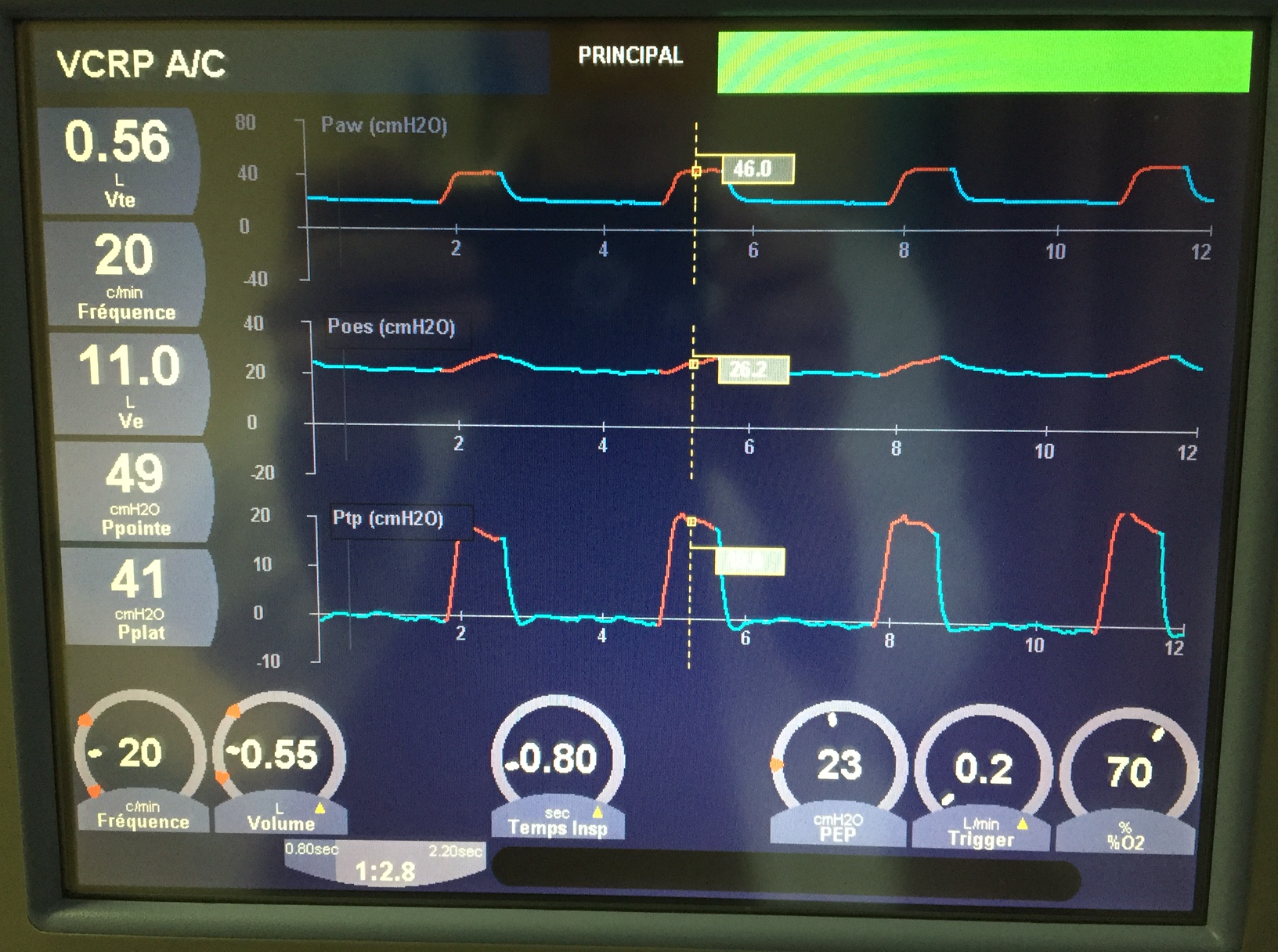
So in my last post I quickly reviewed the basics of Ptp-guided ventilation. So here is a case. We had a woman in her 60’s admitted with bilateral pneumonia, intubated and ventilated. She is morbidly obese and diabetic. Despite antibiotics and usual care, she was getting progressively worse, and was labelled “ARDS.”  POCUS showed she was not in terrible venous congestion, and she had been digressed to a relatively normal IVC. Slowly her ventilator settings crept up to a PEEP of 14 and FiO2 of 100%. As the plateau pressures were approaching 35, we were getting a little antsy, so decided to put in the esophageal balloon and get a better grip as to what was going on.

Here are her original readings:

img_6201

So here we can see that her Pes in expiration is around 23. With a PEEP at 15, that gives us a Pep (exp) of -8. That likely represents a fair bit of atelectasis/derecruitment. Here are some measurements:

img_6203

img_6202

Her dynamic compliance is 21, and static 24. Not too great. Her PV loops are interesting, certainly not showing any over distension (the penguin beak look), and, as Jon Emile Kenny (@heart_lung) cleverly explains about the Pop tracing:

“On this patient, the stress index appears to be low, which is somewhat consistent with your Ptp tracing. there is a terminal fall in the Ptp [wave looks like an upside down U] which suggests terminal airway recruitment; that is, during the terminal portion of the breath, the Ptp is falling with equivalent volume delivered [again only works with square-wave/constant flow]. in other words, if [at the end of the breath] less Ptp is needed to accommodate equivalent flow/volume, there is terminal increase in compliance/decrease in elastance – or lung units are recruitedSo these numbers suggest that there is extrinsic compression of the lung, due to chest wall weight and abdominal pressure. This makes the airway pressure (Paw) not representative of alveolar stretch, and hence not a good guide of ventilation. The PEEP, despite being fairly high, is below the level needed to prevent atelectasis.”

Indeed Jon, that appears to be the case.

So we started to raise the PEEP, trying to get the Ptp (exp) closer to zero:


img_6204

img_6207

img_6206

So we can see that our Ptp (exp) is approaching zero, and the PV loops suggest there is still no over distension. In fact, the compliance, as Jon had predicted, improves slightly. The plateau pressures are up into the mid 40’s which, without a balloon, would be pretty concerning. But the Ptp (insp) is less worrisome, in the mid 20’s, about at the limit we’d like.

At this point, still seeing that increasing compliance, we continue raising the PEEP to 23, and actually see the plateau pressures start to drop, consistent with having recruited lung. Now the Ptp (insp) is 23, and the compliances have increased.


img_6211

img_6212img_6213

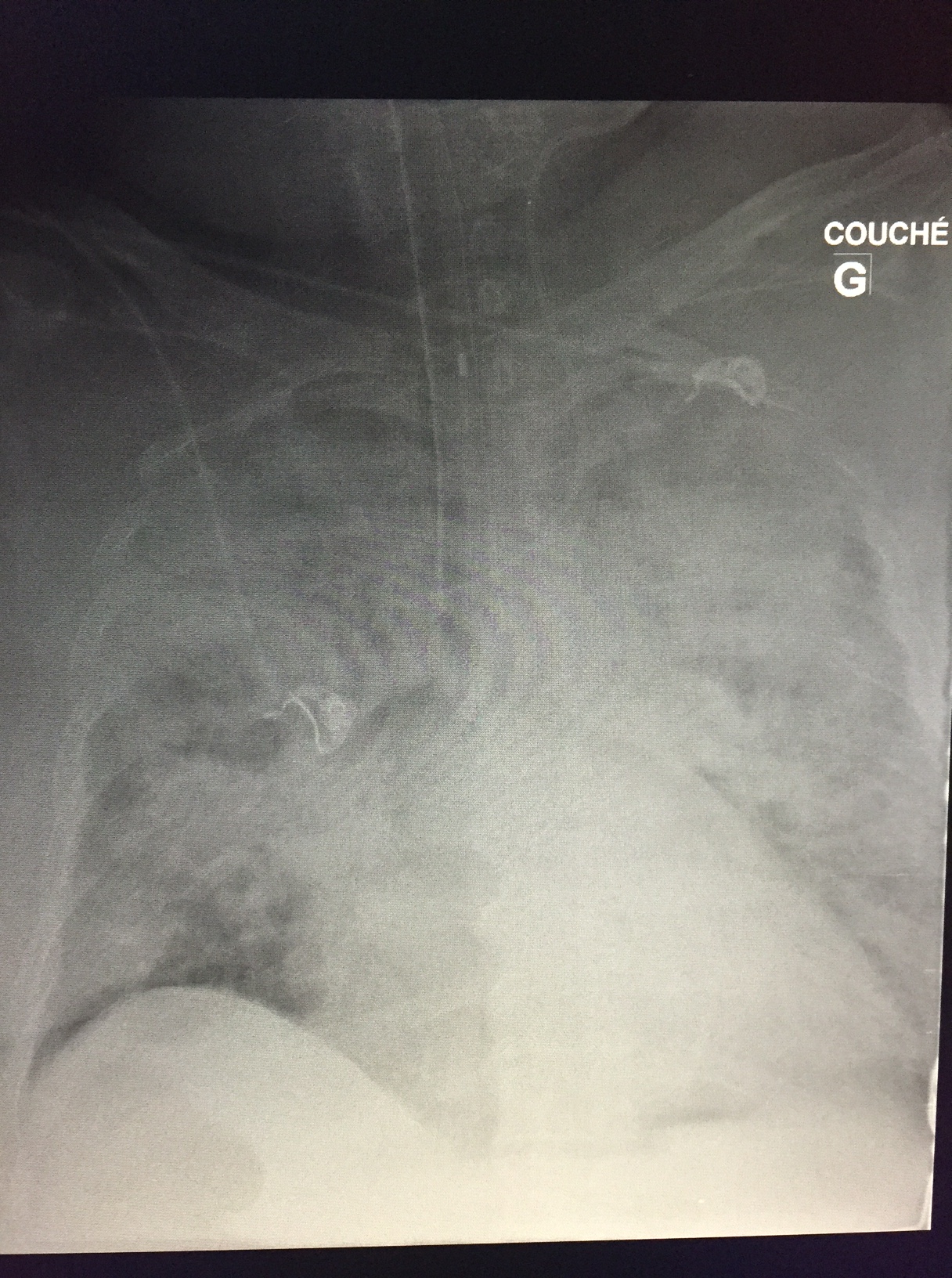
We thus leave things as is, and by the next morning, we are down to 30% FiO2. Here are the before and after CXRs:

img_6300img_6299

So a fair bit of her “ARDS” was actually atelectasis related to obesity and increased intra-abdominal pressure, and that what seems like exceedingly high PEEP is actually just enough to prevent atelectasis.


Love to hear from others who use the technology, or just interested!

cheers


Philippe